Just when I'm getting settled back into Schaumburg, and getting ready to resettle in Chicago for the school year, I suddenly get a chance to go to Virginia for a few days to work on a house with my first love, Appalachia Service Project! How random is that?
My mom had been insanely busy at work, so I was with her at our church last Friday helping her to set up for an event. There I ran into Howard, the Youth Minister (who organizes the ASP trips), and he introduced me to some people who are going on the upcoming adults-only trip, since they're going to Jonesville where I was once on staff. I started telling them about the area when one of them suddenly remembered that there was one spot left. I'm leaving tomorrow at three in the morning (so tonight, really) to drive down there.
So excited! The ASP center in Jonesville, VA, is one of those places I never thought I'd ever see again. But then, that's what I said after the summer of 2007, only to return in 2008 to do a random research project for a few weeks. At the end of that little trip, I remember Keith, the building manager at the time, telling me, "You'll be back, you'll be back!" He was sure of it. I guess he was right!
I have my "Welcome to Jonesvegas" tshirt all packed. And my work boots. And my overalls. Hawt :p
It will be interesting to see how my changing views on religion and whatnot affect my experience--ASP is very much a Christian organization, much more so than Habitat. I'm not as used to the "feel" of Christianity anymore--I was raised Catholic and was pretty active in my church in High School, so I used to be really comfortable with it, enjoy it even, despite my growing agnosticism. It was mostly a cultural thing for me even then, but I still very much appreciated the inspiration and spiritual growth that trips like this afforded me. Now I'm not so sure. We shall see!
15 September 2009

02 September 2009
Charity Hospital Baby. Charity Hospital, Baby.
I can't believe I waited this long, but on Monday, I finally went to a second line. What is that you ask? It's pretty awesome, is what it is--brass bands leading a parade of people wearing crazy outfits and carrying feathered umbrellas and selling beer out of wagons, exuding energy. A second line is giant dance party in the street.
Second-lining comes from the traditional New Orleans jazz funerals--it's basically the crowd dancing behind the official funeral procession (second in line) without necessarily having an actual body to follow. Social Aid and Pleasure Clubs organize them for all kinds of occasions, so I'm told you can find one every week if you look, commemorating or honoring someone or something. I missed one earlier this summer in memorial of Michael Jackson.
Check out this awesome video (Let Me Do My Thang: Rebirth Brass Band, by Keith Reynaud, Jr.) to see and hear both the dancing/music and some of the history (do it, it's really good! Last night I saw Rebirth perform at the Maple Leaf, they show it!).
The second line that I went to was to "Save Charity Hospital!" I don't know all the details, but the debate about the hospital is an interesting piece of public policy. A teaching hospital affiliated with LSU, Charity Hospital traditionally was the hospital that served -everyone-, i.e. it was willing to take those without health insurance. As a result, it has a historical/cultural place in the hearts of many city residents. Its evacuation after Hurricane Katrina made national news, and afterwards it was never reopened. Once a fairly attractive art-deco tower of poured-concrete, it now looks kind of sad--dark windows, green and brown stains on the concrete, a family of cats standing guard at the old back entrance. The National Trust for Historic Preservation listed it as one of "America's Most Endangered Places" in 2008.
There are plans, however, to rebuild. But here's the catch--the powers that be (LSU and the city) are looking to demolish several square blocks of homes and businesses (a la eminent domain, which pretty much nobody likes) to build a new facility--right next to the old one!--instead of renovating or rebuilding on the original site. There must be some rationale behind this plan, but I'm pretty skeptical. Frankly, it sounds asinine. Eventually somebody is going to have to renovate or demolish the old building anyway--or were they planning on setting it aside as a permanent home for the city's feral cat population?
So the "Second Line to Save Charity Hospital" served two purposes: first, to express both the importance of Charity Hospital to the community and the desire to see it reopened, and secondly, the outrage of the home and business owners who would be forced to relocate. I saw many "Charity Hospital Baby" signs with arrows pointing to the individual who held it, as well as a few "Hands off Our Homes." Overall, the event seemed to be a success--great turnout, awesome music by the Hot 8 Brass Band and Rebirth Brass Band, lots of fun.
But I have to wonder what kind of impact a parade where everyone is having a great time can actually have on the powers that be.
A second line is not an angry march on village hall, it is not picketing or chanting, and it is pretty much the opposite of a hunger strike. There was no outrage, no anger, no heart-wrenching pleas or forceful demands--despite the messages on the signs people carried, the atmosphere was really festive. Joyous, even. From a community organizing perspective, I feel like a second line is great to get people excited and draw some attention from the public, but if it stops there, then I am not so sure it can have much impact on people at city hall who are currently holding all the cards.
Is it just a party, or is it a protest? To accomplish something, shouldn't that distinction be a little more clear?
Second-lining comes from the traditional New Orleans jazz funerals--it's basically the crowd dancing behind the official funeral procession (second in line) without necessarily having an actual body to follow. Social Aid and Pleasure Clubs organize them for all kinds of occasions, so I'm told you can find one every week if you look, commemorating or honoring someone or something. I missed one earlier this summer in memorial of Michael Jackson.
Check out this awesome video (Let Me Do My Thang: Rebirth Brass Band, by Keith Reynaud, Jr.) to see and hear both the dancing/music and some of the history (do it, it's really good! Last night I saw Rebirth perform at the Maple Leaf, they show it!).
The second line that I went to was to "Save Charity Hospital!" I don't know all the details, but the debate about the hospital is an interesting piece of public policy. A teaching hospital affiliated with LSU, Charity Hospital traditionally was the hospital that served -everyone-, i.e. it was willing to take those without health insurance. As a result, it has a historical/cultural place in the hearts of many city residents. Its evacuation after Hurricane Katrina made national news, and afterwards it was never reopened. Once a fairly attractive art-deco tower of poured-concrete, it now looks kind of sad--dark windows, green and brown stains on the concrete, a family of cats standing guard at the old back entrance. The National Trust for Historic Preservation listed it as one of "America's Most Endangered Places" in 2008.
There are plans, however, to rebuild. But here's the catch--the powers that be (LSU and the city) are looking to demolish several square blocks of homes and businesses (a la eminent domain, which pretty much nobody likes) to build a new facility--right next to the old one!--instead of renovating or rebuilding on the original site. There must be some rationale behind this plan, but I'm pretty skeptical. Frankly, it sounds asinine. Eventually somebody is going to have to renovate or demolish the old building anyway--or were they planning on setting it aside as a permanent home for the city's feral cat population?
So the "Second Line to Save Charity Hospital" served two purposes: first, to express both the importance of Charity Hospital to the community and the desire to see it reopened, and secondly, the outrage of the home and business owners who would be forced to relocate. I saw many "Charity Hospital Baby" signs with arrows pointing to the individual who held it, as well as a few "Hands off Our Homes." Overall, the event seemed to be a success--great turnout, awesome music by the Hot 8 Brass Band and Rebirth Brass Band, lots of fun.
But I have to wonder what kind of impact a parade where everyone is having a great time can actually have on the powers that be.
A second line is not an angry march on village hall, it is not picketing or chanting, and it is pretty much the opposite of a hunger strike. There was no outrage, no anger, no heart-wrenching pleas or forceful demands--despite the messages on the signs people carried, the atmosphere was really festive. Joyous, even. From a community organizing perspective, I feel like a second line is great to get people excited and draw some attention from the public, but if it stops there, then I am not so sure it can have much impact on people at city hall who are currently holding all the cards.
Is it just a party, or is it a protest? To accomplish something, shouldn't that distinction be a little more clear?
28 August 2009
Public Housing Redevelopment: God vs. Human Rights vs. Grey Area
Last week I attended the groundbreaking ceremony for the Lafitte Public Housing Projects. A few buildings from the old projects are to remain standing, but the rest have been or are about to be demolished and redeveloped into mixed income housing by Providence Community Housing, a non-profit developer. The ceremony was, from my outsiders perspective, bizarre--never have I seen such a mix of politics and Southern preachin'. To hear everybody talk (everybody being Mayor Nagin, Catholic Charities representatives, city council and congresspeople, former Lafitte residents, and even Obama-appointed HUD Secretary Shaun Donovan) God himself in all his Grace and Might descended from the heavens and operated the crane that tore those projects from the ground and pushed those shovels into the ground. He gave them strength, thank God--his Divine Judgement and Wisdom were behind the entire... thing.
"Thing" being either the Realization of the Kingdom or a gross Human Rights violation. Apparently neither God, nor the New Orleans Archdiocese, which has supported redevelopment, is on the side of the UN/Advisory Group on Forced Evictions, which has condemned the way New Orleans has handled the redevelopment of public housing since the storm, particularly the illegal forced evictions that occured with the backdrop of an unprecedented housing crises (anyone notice how Katrina kinda torn down a whole bunch of houses? anyone? it doesn't take a genius...).
Last night, I attended quite the opposite event--a film screening and informational session at the 7th Ward Neighborhood Center/the Porch. The film told the story of public housing residents who returned after the storm to find their homes boarded up (with expensive metal instead of boards), those who took back their units and cleaned them up only to be kicked out again, those who found their Section 8 vouchers to be absolutely useless, the suffering and the homeless. A nod was given to Obama and Donovan for the extension of vouchers issued specifically to hurricane victims, but otherwise most people present wanted the demolition to stop and there was the belief that the condition of the public housing was not bad at all--very little storm damage, perfectly livable--so the reason for demolition must be something evil, racist, classist, them vs. us.
Looking at these events, it seems like a clear-cut case of good vs. evil (although it is kind of messed up how God is invoked the most by the evil side... we can ignore that for now). But where is the grey area? The one that says, well New Orleans, you really did fuck up the process of redevelopement with your illegal evictions and lack of community input, but (BUT, there needs to be a BUT) redevelopment in and of itself is not all bad? There were former public housing residents on BOTH sides. I can't agree with either side completely, but I can't find a side in the middle--it's kind of frustrating.
The winning side, however, is pretty clear--as I've been told, New Orleans is great at throwing parties but not so great at building movements. To ask for a moratorium on demolition when most of it is already completed makes you a little bit late. There were no action items announced at the end of last night's event--red beans and rice and potatoe salad are delicious, but not the takeaways you want to provide if you're trying to drive people into action!
And on a side note, God should never be used to justify forcing people to patiently wait for what Man has actively and unjustly taken from them. Really I'm not sure God should be used to justify anything even remotely political (which, one could argue, includes just about everything), but especially not that.
"Thing" being either the Realization of the Kingdom or a gross Human Rights violation. Apparently neither God, nor the New Orleans Archdiocese, which has supported redevelopment, is on the side of the UN/Advisory Group on Forced Evictions, which has condemned the way New Orleans has handled the redevelopment of public housing since the storm, particularly the illegal forced evictions that occured with the backdrop of an unprecedented housing crises (anyone notice how Katrina kinda torn down a whole bunch of houses? anyone? it doesn't take a genius...).
Last night, I attended quite the opposite event--a film screening and informational session at the 7th Ward Neighborhood Center/the Porch. The film told the story of public housing residents who returned after the storm to find their homes boarded up (with expensive metal instead of boards), those who took back their units and cleaned them up only to be kicked out again, those who found their Section 8 vouchers to be absolutely useless, the suffering and the homeless. A nod was given to Obama and Donovan for the extension of vouchers issued specifically to hurricane victims, but otherwise most people present wanted the demolition to stop and there was the belief that the condition of the public housing was not bad at all--very little storm damage, perfectly livable--so the reason for demolition must be something evil, racist, classist, them vs. us.
Looking at these events, it seems like a clear-cut case of good vs. evil (although it is kind of messed up how God is invoked the most by the evil side... we can ignore that for now). But where is the grey area? The one that says, well New Orleans, you really did fuck up the process of redevelopement with your illegal evictions and lack of community input, but (BUT, there needs to be a BUT) redevelopment in and of itself is not all bad? There were former public housing residents on BOTH sides. I can't agree with either side completely, but I can't find a side in the middle--it's kind of frustrating.
The winning side, however, is pretty clear--as I've been told, New Orleans is great at throwing parties but not so great at building movements. To ask for a moratorium on demolition when most of it is already completed makes you a little bit late. There were no action items announced at the end of last night's event--red beans and rice and potatoe salad are delicious, but not the takeaways you want to provide if you're trying to drive people into action!
And on a side note, God should never be used to justify forcing people to patiently wait for what Man has actively and unjustly taken from them. Really I'm not sure God should be used to justify anything even remotely political (which, one could argue, includes just about everything), but especially not that.
NHS and Human Rights?
I have one week left of my internship down here in New Orleans--my internship funded by the University of Chicago Human Rights Department. The who? The Human Rights Department. Does that mean I should maybe take some time to actually think about Human Rights while I'm here? Why yes, I believe it does!
There is no question that the work NHS does is human rights work--making homeownership more affordable and available, teaching useful financial skills to help people better manage their own money, working to prevent contractor fraud, giving space for community members to come together and grow and support initiatives that will improve their quality of life--but rights doctrine does not actually appear in its stated mission, goals, or values. Around the office I have heard people talk about wanting to help others, to make things better and to revitalize the community, but I have not heard these desires put into a human rights framework.
And yet it is Human Righst work. The UDHR states that: "Everyone has the right to a standard of living adequate for the health and well-being of himself and his family, including food, clothing, housing and medical care and necessary social services, and the right to security in the event of unemployment, sickness, disability, widowhood, old age or other lack of livelihood...." (Article 25). In the Covenant on Cultural, Social and Economic Rights, "The States Parties ... recognize the right of everyone to an adequate standard of living for himself and his family, including adequate food, clothing and housing, and to the continuous improvement of living conditions...." (Article 11). NHS works to make homeownership a viable housing option, thereby stabilizing communities and increasing the entire neighborhood's standard of living.
The UN-HABITAT agenda further commits the UN and partner nations to "the full and progressive realization of the right to adequate housing.... We recognize an obligation by Governments to enable people to obtain shelter and to protect and improve dwellings and neighbourhoods. We commit ourselves to the goal of improving living ... conditions on an equitable and sustainable basis, so that everyone will have adequate shelter that is healthy, safe, secure, accessible and affordable" (Habitat Agenda, paras 39 and 40). While what NHS does isn't about the "full and progressive realization" of housing rights, they do use government funds to protect and improve neighborhoods.
For even more international agreement on why housing is a human right, go here (the People's Movement for Human Rights Education) or check out the UN-HABITAT website ("Promoting sustainable urban development and adequate shelter for all").
The question I am asking myself now is whether NHS could do more to promote human rights by actively engaging in the human rights language and doctrines that it currently does not employ. Looked at through a lens of human rights, does the organization become more or less effective? Was I wrong to just accept that NHS is furthering human rights whether they know it or not and leave it at that, or should I have been more critical? Or was it good that I have practically ignored rights doctrine this summer, since sometimes it just gets in the way?
Rights doctrine is complicated--as a lens, it breaks down things into rights and non-rights and different kinds of rights and sometimes asks us to prioritize. This could be useful, but could also confuse us and lead us away from what we already know is just good, a positive, something the community needs to succeed whether its a right or not. When I told a coworker I was minoring in Human Rights, she remarked that it was kind of funny how human rights have become a profession now, instead of just something Human and Right for everybody.
The topic of Rights and NHS is something that I wish I had delved into earlier in the summer, but is maybe something I can think more about in my coursework next quarter.
There is no question that the work NHS does is human rights work--making homeownership more affordable and available, teaching useful financial skills to help people better manage their own money, working to prevent contractor fraud, giving space for community members to come together and grow and support initiatives that will improve their quality of life--but rights doctrine does not actually appear in its stated mission, goals, or values. Around the office I have heard people talk about wanting to help others, to make things better and to revitalize the community, but I have not heard these desires put into a human rights framework.
And yet it is Human Righst work. The UDHR states that: "Everyone has the right to a standard of living adequate for the health and well-being of himself and his family, including food, clothing, housing and medical care and necessary social services, and the right to security in the event of unemployment, sickness, disability, widowhood, old age or other lack of livelihood...." (Article 25). In the Covenant on Cultural, Social and Economic Rights, "The States Parties ... recognize the right of everyone to an adequate standard of living for himself and his family, including adequate food, clothing and housing, and to the continuous improvement of living conditions...." (Article 11). NHS works to make homeownership a viable housing option, thereby stabilizing communities and increasing the entire neighborhood's standard of living.
The UN-HABITAT agenda further commits the UN and partner nations to "the full and progressive realization of the right to adequate housing.... We recognize an obligation by Governments to enable people to obtain shelter and to protect and improve dwellings and neighbourhoods. We commit ourselves to the goal of improving living ... conditions on an equitable and sustainable basis, so that everyone will have adequate shelter that is healthy, safe, secure, accessible and affordable" (Habitat Agenda, paras 39 and 40). While what NHS does isn't about the "full and progressive realization" of housing rights, they do use government funds to protect and improve neighborhoods.
For even more international agreement on why housing is a human right, go here (the People's Movement for Human Rights Education) or check out the UN-HABITAT website ("Promoting sustainable urban development and adequate shelter for all").
The question I am asking myself now is whether NHS could do more to promote human rights by actively engaging in the human rights language and doctrines that it currently does not employ. Looked at through a lens of human rights, does the organization become more or less effective? Was I wrong to just accept that NHS is furthering human rights whether they know it or not and leave it at that, or should I have been more critical? Or was it good that I have practically ignored rights doctrine this summer, since sometimes it just gets in the way?
Rights doctrine is complicated--as a lens, it breaks down things into rights and non-rights and different kinds of rights and sometimes asks us to prioritize. This could be useful, but could also confuse us and lead us away from what we already know is just good, a positive, something the community needs to succeed whether its a right or not. When I told a coworker I was minoring in Human Rights, she remarked that it was kind of funny how human rights have become a profession now, instead of just something Human and Right for everybody.
The topic of Rights and NHS is something that I wish I had delved into earlier in the summer, but is maybe something I can think more about in my coursework next quarter.
27 August 2009
In the News: New Orleans + Obama = Seems OK
(Source: Truthout.org, http://www.truthout.org/082709S)
(Source: NYTimes, http://www.nytimes.com/2009/08/28/opinion/28liu.html?scp=1&sq=new%20orleans&st=cse)
Op-Chart
The State of New Orleans, An Update
Promises, Promises: Early Katrina Praise for Obama
Thursday 27 August 2009
by: Ben Evans And Becky Bohrer | Visit article original @ The Associated Press
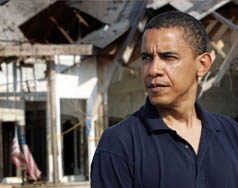
President Barack Obama tours the hurricane damaged streets of New Orleans. (Photo: BarackObama.com)
Washington - As a presidential candidate, Barack Obama pledged to right the wrongs he said bogged down efforts to rebuild the Gulf Coast after Hurricane Katrina. Seven months into the job, he's earning high praise from some unlikely places.
Gov. Bobby Jindal, R-La., says Obama's team has brought a more practical and flexible approach. Many local officials offer similar reviews. Even Doug O'Dell, former President George W. Bush's recovery coordinator, says the Obama administration's "new vision" appears to be turning things around.
Not too long ago, Jindal said in a telephone interview, Louisiana governors didn't have "very many positive things" to say about the Federal Emergency Management Agency.
But Jindal said he had a lot of respect for the current FEMA chief, Craig Fugate, and his team. "There is a sense of momentum and a desire to get things done," the governor said.
Added O'Dell: "I think the results are self-evident."
The retired Marine general served what he calls a frustrating stint as Bush's recovery coordinator last year. "What people have said to me is that for whatever reason, problems that were insurmountable under previous leadership are getting resolved quickly," O'Dell said.
"And I really hate to say that because (the top FEMA leaders) in my time there were good, hardworking, earnest men, but they were also the victims of their own bureaucracy."
It's not that Obama has miraculously mended the Gulf Coast since Katrina struck on Aug. 29, 2005. The storm killed more than 1,600 people in Louisiana and Mississippi and caused more than $40 billion in property damage. Hurricane Rita followed nearly a month later, with billions of dollars in additional damage and at least 11 more deaths.
On the fourth anniversary of Katrina, many communities remain broken, littered with boarded-up houses and overgrown vacant lots. Hundreds of projects - including critical needs such as sewer lines, fire stations and a hospital - are entangled in the bureaucracy or federal-local disputes over who should pick up the tab.
Like Bush, Obama has critics who say he's not moving aggressively enough.
Chris Kromm, director of the Institute for Southern Studies, an advocacy group, said the coast is "still waiting for Washington to show leadership."
In many areas, such as long-term coastal rehabilitation and rebuilding levees, it's too early to determine whether Obama will live up to the many promises he made.
But on several fronts, there is evidence of progress.
Victor Ukpolo, chancellor of Southern University at New Orleans, said the administration has been able to "move mountains" for his school, virtually wiped out by Katrina and the breached levees.
Homeland Security Secretary Janet Napolitano has visited the campus twice and awarded $32 million to replace four buildings.
"It's really awesome," Ukpolo said. "There's been so much progress."
Tommy Longo, mayor of Waveland, Miss., said it got so bad toward the end of Bush's tenure that "you almost couldn't get them to return a phone call, and you certainly weren't going to get them to make any big decisions."
"It has been refreshing to be back working with people who are hungry and want to make a difference," said Longo, a Democrat. "Who knows, a few years from now, at the end of Obama's term it may be back to the same ol', same ol', but it is refreshing now."
Obama backed up his pledge to name an experienced FEMA administrator by appointing Fugate, a career emergency management professional from Florida. By contrast, Bush's director was Michael Brown, a lawyer who worked at the International Arabian Horse Association. He resigned after Katrina.
In half a year, Obama's team says it has cleared at least 75 projects that were in dispute, including libraries, schools and university buildings. The administration has embraced a new, independent arbitration panel for the most stubborn disputes, and assigned senior advisers to focus on the rebuilding.
The administration recently reversed a FEMA rule that barred communities from building fire stations and other critical projects in vulnerable areas. Local officials said the rule could have effectively killed off some places.
The Bush administration's flat-footed response to Katrina left a lasting stain on Bush's legacy, and the sluggish pace of the long-term recovery has drawn continued criticism.
Local officials and civic leaders long have complained about the changing cast of FEMA representatives who review project worksheets and demand repeated inspections or additional paperwork. In some cases, agency workers have subtracted costs that local officials thought were settled.
Along with battling red tape, community officials say FEMA often stubbornly refused to pay for work that should have qualified for federal aid.
Under Bush, FEMA frequently argued that local governments viewed the storms as a chance to get rundown buildings replaced with federal dollars. Delays also were blamed on disarray at the local and state levels, with some projects stalled until local officials could decide their own priorities or provide documentation to make their case.
Critics countered that some Bush officials seemed more concerned with preventing fraud than getting people back on their feet.
Jindal and Paul Rainwater, the governor's recovery coordinator who once stormed out of a meeting with Bush officials in frustration, said plenty of headaches remain. Overall, Jindal gives the Obama administration an "incomplete" because there is so much still to do. A glaring example is the shuttered, 20-story Charity Hospital, which served New Orleans' poor and uninsured. The state claims it is owed nearly $500 million to replace it.
Despite high-level pleas, FEMA has denied the claim under both administrations, saying Charity wasn't properly guarded against further decay after the storm. The agency has offered $150 million, the most it says it can do. The Obama administration rejected a request to replace the hospital using economic stimulus money.
Jindal and Rainwater said the previous administration often wouldn't recognize new information or acknowledge there were real disputes. Sometimes, Rainwater said, Bush officials seemed blind to the devastation around them and said they had to be good stewards of public money.
"They never recognized the enormity of what we're working through," Rainwater said. "We're not just trying to rebuild buildings here but entire communities."
"That's the difference" under Obama, Rainwater said. "It's the recognition. ... We're all able to sit down around the table."
(Source: NYTimes, http://www.nytimes.com/2009/08/28/opinion/28liu.html?scp=1&sq=new%20orleans&st=cse)
The State of New Orleans, An Update
THIS year, the Gulf Coast’s recovery from Hurricane Katrina has become President Obama’s responsibility. How bad a situation has he inherited?
The good news is that, on the fourth anniversary of the storm, New Orleans is weathering the recession relatively well. Since June 2008, the metro area has shed only about one percent of its jobs, significantly less than the 4.1 percent of jobs that have been lost nationally. Over the past 12 months, unemployment in New Orleans has mostly hovered around 5 percent. It recently jumped to 7.3 percent, primarily because of an increase in the number of new job seekers (like recent college graduates), but that is still well below the national average of 9.5 percent. At a time when falling home values are keeping many Americans from moving, the city has attracted 10,000 new households, the biggest one-year expansion since 2007.
Continuing repairs to roads, bridges and public buildings in New Orleans are helping shield the area from a more serious slump. The region is also fortunate not to rely heavily on industries like manufacturing that are shedding jobs. And it has benefited from job growth in its sizable government sector, which handles many recovery-related contracts and activities.
Yet New Orleans is not impervious to the economic crisis. Its housing market has stalled, with 39 percent fewer people buying homes this year than did the year before, and 48 percent fewer new homes being built. Also, a drop in consumer spending has hurt city sales-tax revenues.
Meanwhile, New Orleans still has more than 62,000 blighted and vacant houses and apartment buildings. Rents have leveled off, but they remain 40 percent higher than they were before the storm. People worry about what kind of good, long-term jobs there will be to replace recovery-related jobs when those disappear.
In the past eight months, a number of Obama administration officials have visited New Orleans and Mississippi, and they have found ways to help — for example, by accelerating the pace of repairs and by finding homes for families still living in trailers. But next year’s five-year anniversary represents, for many, the midpoint in a 10-year recovery. President Obama’s biggest challenge is to work effectively with Louisiana officials and the next mayor of New Orleans to generate enough progress before next August to show that the city is truly reinventing itself, rather than simply returning to a suboptimal normal.
— AMY LIU, the deputy director of the metropolitan policy program at the Brookings Institution21 August 2009
GNOCDC Ten Minute Briefing on New Orleans' Recovery
This video from the Greater New Orleans Community Data Center moves a little too fast to really take in all the pretty graphs, but the graphs are pretty and it's overall very informative.
GNOCDC Ten Minute Briefing on New Orleans' Recovery
Shared via AddThis
GNOCDC Ten Minute Briefing on New Orleans' Recovery
Shared via AddThis
19 August 2009
T minus 2.5 Weeks
I think the reality that I only have 2.5 weeks left in New Orleans is starting to hit me. I feel like I just got here, but at the same time feel as if I've been here forever, if that makes any sense at all.
This has not been a summer of one singular accomplishment, but a whole bunch of little things mushed together into a very scattered experience. Property campaign letters and photos and merges, oh my! Endless SalesForce, Constant Contact and Excel spreadsheets. Prep for day camp and maybe another fair at the Freret Neighborhood Center. Outreach and phone calls at both centers. Circle Food 4 Thought phone calls and emails. Marketing stories to edit. And now I'm writing copy for... the entire NHS website? Or at least leaving it more organized than it's currently convoluted condition--there's so much content and so much debate about what that content should be and look like (ahhh office politics!) that I'm not sure I'll have time to finish.
I've done a lot, but it's kind of all over the place, so I don't have a very straightforward answer for the question of "What did you do last summer?" Everything!
Outside of work, I've also done a lot, and I feel like the experience of living down here has been just as valuable (if not more valuable) than what I've done at work. I've explored a new city, pretty much entirely alone--I have roommates, and while I did spend a little time trying to teach one of them to drive, I rarely see them. So I'll add adventuring into a bar alone, and shopping and entertaining myself alone, to my list of things I did this summer. I also got a lot more practice cooking for myself--it would have been awesome to eat out at all the delcious restaurants down here, every day, but cooking was friendlier on my wallet. I can't say I haven't ever been lonely (thank god for Firefly and The Office on Hulu! And books!), but I did end up meeting some great people. When they weren't around, I'm pretty great people, too, so it all worked out :)
I've also biked more than I ever have (thighs of steel!), and took yoga classes for the first time (love it!). Yesterday I ran 4 miles along the levee, the second 2 in the pouring rain, I might add--it kind of sucked, my headphones and/or iPod might be the price for not paying more attention to the weather. While I'm disappointed I couldn't get a gym or pool membership (that water is going to feel sooo good when I get home!), I've been pretty active. I'm also semi-tan, which is a first (for real! Lauren said so!).
So what about these next 2.5 weeks? The past 2 days have kind of sucked, actually--I can't seem to get back into working mode after Lauren and Katherine left on Tuesday morning, and getting stuck in a downpour 2 miles from my house, and then having a chuck of my living room ceiling collapse last night (the apartment is quite literally coming apart at the seams!), I haven't been in the best mood. But yoga tonight was restorative. I have a to-do list to work with and just enough time to do it (hopefully). Time to get cracking.
This has not been a summer of one singular accomplishment, but a whole bunch of little things mushed together into a very scattered experience. Property campaign letters and photos and merges, oh my! Endless SalesForce, Constant Contact and Excel spreadsheets. Prep for day camp and maybe another fair at the Freret Neighborhood Center. Outreach and phone calls at both centers. Circle Food 4 Thought phone calls and emails. Marketing stories to edit. And now I'm writing copy for... the entire NHS website? Or at least leaving it more organized than it's currently convoluted condition--there's so much content and so much debate about what that content should be and look like (ahhh office politics!) that I'm not sure I'll have time to finish.
I've done a lot, but it's kind of all over the place, so I don't have a very straightforward answer for the question of "What did you do last summer?" Everything!
Outside of work, I've also done a lot, and I feel like the experience of living down here has been just as valuable (if not more valuable) than what I've done at work. I've explored a new city, pretty much entirely alone--I have roommates, and while I did spend a little time trying to teach one of them to drive, I rarely see them. So I'll add adventuring into a bar alone, and shopping and entertaining myself alone, to my list of things I did this summer. I also got a lot more practice cooking for myself--it would have been awesome to eat out at all the delcious restaurants down here, every day, but cooking was friendlier on my wallet. I can't say I haven't ever been lonely (thank god for Firefly and The Office on Hulu! And books!), but I did end up meeting some great people. When they weren't around, I'm pretty great people, too, so it all worked out :)
I've also biked more than I ever have (thighs of steel!), and took yoga classes for the first time (love it!). Yesterday I ran 4 miles along the levee, the second 2 in the pouring rain, I might add--it kind of sucked, my headphones and/or iPod might be the price for not paying more attention to the weather. While I'm disappointed I couldn't get a gym or pool membership (that water is going to feel sooo good when I get home!), I've been pretty active. I'm also semi-tan, which is a first (for real! Lauren said so!).
So what about these next 2.5 weeks? The past 2 days have kind of sucked, actually--I can't seem to get back into working mode after Lauren and Katherine left on Tuesday morning, and getting stuck in a downpour 2 miles from my house, and then having a chuck of my living room ceiling collapse last night (the apartment is quite literally coming apart at the seams!), I haven't been in the best mood. But yoga tonight was restorative. I have a to-do list to work with and just enough time to do it (hopefully). Time to get cracking.
12 August 2009
Eat + Dance + Sing + Paint = Activate!
Ah! A lot has happened, sorry I haven't really been keeping up with my blog. Last week was the Night Out Against Crime and the Circle Food 4 Thought Campaign Kick-off, both of which went really well, and then my parents and brother Tommy came to visit for the weekend. This all left me thoroughly stuffed with action and really good food!
For Circle Food 4 Thought photos (and all the others I've taken down here) go to:
http://www.facebook.com/album.php?aid=2100092&id=2911230&l=2a6271d825
Night Out Against Crime (Tuesday, August 4th) is a national day to support community solidarity in the face of criminal activity in their neighborhood, so there were block parties happening all over the city/country. I went to one sponsored by Neighbors United a few blocks from the NHS Main Office, where I helped the Freret Neighborhood Center pass out free backpacks full of school supplies that were donated by the Salvation Army. And here is where my week of awesome food began: I had grillades and grits, which was really delicious.
The very next day (Wednesday, August 5th) was the Circle Food 4 Thought Kick-off Event. I spent the hours before the event started helping to hurridly put labels on 2,500 postcards so that people could sign one for each of 3 City Council representatives asking for the city's support in reopening Circle Food Store. Printing and sticking address labels is tedious work, as was much of the work I did in the weeks prior (calling people to invite them to a task force meeting, calling them again to tell them it was cancelled, calling a bunch more people to invite them to the event, researching press-release opportunities...), but when everything came together, the resulting event went really well. 350+ people attended, there was motivational speaking, postcard signing, a brass band, dancing, and of course, fresh local foods! My parents arrived just as the event was ending, in time to get some really delicious shrimp, watermelon, snoballs and lemonade.
Thursday morning, I met with David and Linda about a newer project of mine--NHS is in the process of revamping their website, and while they have hired a company to help with this, they still need to write their own copy. Or should I say, they still need to have an intern write their copy? I've started out by editing a bunch of marketing stories they've collected and highlighting areas that could use more information--these can go both on the website and in other publications. I will also be collecting/writing more stories, since so far they don't have any about success they've had with the neighborhood centers. The website also needs descriptions of NHS services, what each department does, information on how to buy/renovate a home, etc, which I will be working with the appropriate staff people to write.
Thursday afternoon and Friday I took off to spend time with my family--by the time they left on Tuesday, we had eaten po-boys, walked around the French Quarter and French Market, eaten beignet at Cafe Dumonde, taken a ghost tour and a swamp tour, eaten gumbo and seafood, and visted the Audobon Zoo. My dad and I also spent Saturday in Gentilly working on a house with the Episcopal Disaster Recovery organization, and later that day met up with my mom and Tommy to attend a performance by the Urban Bush Women leadership conference that's been going on this week (sponsored by NHS/7th Ward Neighborhood Center). It was kind of crazy, but overall a pretty awesome time.
Now I'm back at work following up with the campaign kick-off by sorting all the postcards that were signed and entering all the new contact information we got from sign-in sheets into an excel document, and then into our gmail account so that we can invite people to the next task force meeting for the campaign. And of course, not everyone has email, so I will probably have to call all the people who said they were interested but didn't give an email address.
For relaxation, tonight there is a free yoga class at the Freret Neighborhood Center!
For Circle Food 4 Thought photos (and all the others I've taken down here) go to:
http://www.facebook.com/album.php?aid=2100092&id=2911230&l=2a6271d825
Night Out Against Crime (Tuesday, August 4th) is a national day to support community solidarity in the face of criminal activity in their neighborhood, so there were block parties happening all over the city/country. I went to one sponsored by Neighbors United a few blocks from the NHS Main Office, where I helped the Freret Neighborhood Center pass out free backpacks full of school supplies that were donated by the Salvation Army. And here is where my week of awesome food began: I had grillades and grits, which was really delicious.
The very next day (Wednesday, August 5th) was the Circle Food 4 Thought Kick-off Event. I spent the hours before the event started helping to hurridly put labels on 2,500 postcards so that people could sign one for each of 3 City Council representatives asking for the city's support in reopening Circle Food Store. Printing and sticking address labels is tedious work, as was much of the work I did in the weeks prior (calling people to invite them to a task force meeting, calling them again to tell them it was cancelled, calling a bunch more people to invite them to the event, researching press-release opportunities...), but when everything came together, the resulting event went really well. 350+ people attended, there was motivational speaking, postcard signing, a brass band, dancing, and of course, fresh local foods! My parents arrived just as the event was ending, in time to get some really delicious shrimp, watermelon, snoballs and lemonade.
Thursday morning, I met with David and Linda about a newer project of mine--NHS is in the process of revamping their website, and while they have hired a company to help with this, they still need to write their own copy. Or should I say, they still need to have an intern write their copy? I've started out by editing a bunch of marketing stories they've collected and highlighting areas that could use more information--these can go both on the website and in other publications. I will also be collecting/writing more stories, since so far they don't have any about success they've had with the neighborhood centers. The website also needs descriptions of NHS services, what each department does, information on how to buy/renovate a home, etc, which I will be working with the appropriate staff people to write.
Thursday afternoon and Friday I took off to spend time with my family--by the time they left on Tuesday, we had eaten po-boys, walked around the French Quarter and French Market, eaten beignet at Cafe Dumonde, taken a ghost tour and a swamp tour, eaten gumbo and seafood, and visted the Audobon Zoo. My dad and I also spent Saturday in Gentilly working on a house with the Episcopal Disaster Recovery organization, and later that day met up with my mom and Tommy to attend a performance by the Urban Bush Women leadership conference that's been going on this week (sponsored by NHS/7th Ward Neighborhood Center). It was kind of crazy, but overall a pretty awesome time.
Now I'm back at work following up with the campaign kick-off by sorting all the postcards that were signed and entering all the new contact information we got from sign-in sheets into an excel document, and then into our gmail account so that we can invite people to the next task force meeting for the campaign. And of course, not everyone has email, so I will probably have to call all the people who said they were interested but didn't give an email address.
For relaxation, tonight there is a free yoga class at the Freret Neighborhood Center!
04 August 2009
A great opinion article on the storm from t r u t h o u t
This article is very good, although quite depressing. One of the comments posted counters the gloom quite nicely: "[New Orleans] is far from dead, it is alive with young people streaming in from all over the U.S. to party and make families and dedicate themselves to restoring the city. It is not dead, it is alive with people who live with passion and joy and appreciation of all the shabby/elegant beauty and music and FOOD that the city offers."
Do You Know What It Means to Miss New Orleans?
Monday 03 August 2009
by: William Rivers Pitt, t r u t h o u t | Columnist
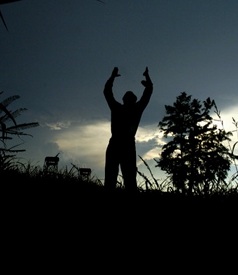
New Orleans resident Robert Green Sr. stands where his mother's home once stood in the lower ninth ward. Green's mother died during the Hurricane. (Photo: Ted Jackson / The Times - Picayune)
Do you know what it means to miss New Orleans,
And miss it each night and day?
I know I'm not wrong, the feeling's getting stronger,
The longer I stay away ...
- Louis Armstrong
The city of New Orleans will be on the minds of many in the coming days and weeks. The four-year anniversary of the worst civil catastrophe in American history - one of the worst such catastrophes in all of human history - will soon be upon us. It was four years ago, the length of one presidential term, that a storm came, and the seas rose, and the levees fell and a city was, for all practical purposes, murdered right before our eyes.
Four years ago, it happened like this.
On August 23, 2005, Tropical Depression Twelve swallowed up the remains of Tropical Depression Ten over the Bahamas and Puerto Rico and began moving towards the United States. Two days later, the storm was designated a hurricane and named Katrina. It made landfall in Florida and swung to the south-southwest, gathering strength from the warm waters of the Gulf of Mexico. A day later, the storm's track was recalibrated by the National Hurricane Center, with the line pointing straight into the heart of the Mississippi Delta. Louisiana Gov. Kathleen Blanco declared a state of emergency, and the Louisiana National Guard was mobilized.
By dawn the next day, Katrina had become a Category 3 hurricane. Evacuations, at first voluntary and later mandatory, were ordered in the parishes that lay across the path of the storm. New Orleans Mayor Ray Nagin emphasized to residents of the Ninth Ward to get a head start on the evacuation. Ten truckloads of water and meals were delivered to the Superdome, enough to support 15,000 refugees for three days. That night, George W. Bush was briefed by National Hurricane Center Director Max Mayfield on the status of and potential danger posed by Katrina. Forty minutes after midnight, Katrina became a Category 4 hurricane.
By 7:00 AM (CDT), Katrina had become a Category 5 hurricane, with maximum sustained winds of 175 mph and gusts up to 215 mph. The storm was expected to make landfall overnight, and New Orleans lay directly in its path. Mayor Nagin ordered the mandatory evacuation of the city, and close to 30,000 people poured into the Superdome seeking shelter. George W. Bush participated in a video conference with Max Mayfield and FEMA Director Michael Brown, who warned Mr. Bush that the storm was more severe than Andrew, was headed directly for New Orleans and the city's levees were in grave danger of collapse. Brown emphatically described Katrina as "the big one." Mr. Bush said exactly 40 words - one sentence promising support - and stayed mute for the rest of the meeting.
That was Sunday, August 28, 2005, the last day the city of New Orleans would exist as we have known it. At 6:10 AM (CDT) the next day, Katrina made landfall in Louisiana.
By the end of that Monday, virtually the entire city of New Orleans was under more than ten feet of water. Rooftops began to disappear under the incoming tide. Levee after levee failed, an event later blamed on the Louisiana Army Corps of Engineers, despite the fact that George W. Bush that same year had stripped more than $70 million in funding for the maintenance of those levees - virtually the entire Louisiana COE budget - to pay for his ongoing wars in Iraq and Afghanistan.
Like a slow-motion nightmare, Americans watched the steady annihilation of New Orleans unfold on television while Bush discussed immigration with Homeland Security Director Michael Chertoff, shared a birthday cake photo-op with Sen. John McCain, promoted his Medicare Drug Benefit plan in Arizona and California and went to bed without responding to Governor Blanco's urgent plea for assistance. "Mr. President, we need your help," read the message she had relayed to Bush that day. "We need everything you've got." There would be no reply that day.
It was not until the middle of the next day that Director Chertoff became aware that the New Orleans levees had failed and that the city was in mortal peril. Mr. Bush played guitar on television with country star Mark Willis next to split-screen images of bodies floating in the floodwaters and scenes of residents "looting" stores, much of which was perpetrated by stranded citizens seeking food and shelter. It had been three days since tens of thousands of people had sought shelter in the Superdome, food and water were running out, sanitary conditions were execrable, the heat became overwhelming and people started dying like insects stuffed in a killing bottle by a cruel, sadistic child. Residents trying to flee across the bridge were turned back at gunpoint. The city of New Orleans finally collapsed into chaos and drowned in salt water on national television.
A city still stands where New Orleans once was, and bears the same name, but it is not the same city, and never will be again. The death toll will never be known, because the river and the swamp and the sea took so many and kept them, because those who were lost were mostly the unnumbered poor who lacked the means to flee, because back in those days, we didn't do body counts. Thousands upon thousands of the city's residents are still gone four years later, either to the grave or to far-flung points on the compass, evacuees with no way to return home and, in many cases, no homes to return to. Most of the Ninth Ward still remains a sculpture of rubble and destruction to this day.
What does it mean to miss New Orleans? It means knowing that one of the most golden citadels of our shared history - a cradle of multiculturalism, the birthplace of jazz, seed corn of so much that is America - was allowed to die of neglect, disdain, racism, greed and simple stupidity right before our eyes. A city stands where New Orleans once was, but it is not New Orleans, not really. All that was the city, all that it gave this country, and so many of the people who lived there, are gone forever.
Do not forget, do not let your children forget, what it means to miss New Orleans.
William Rivers Pitt is a New York Times and internationally bestselling author of two books: "War on Iraq: What Team Bush Doesn't Want You to Know" and "The Greatest Sedition Is Silence." His newest book, "House of Ill Repute: Reflections on War, Lies, and America's Ravaged Reputation," is now available from PoliPointPress.
The Good, The Bad, The Peace Corps
Things have been kind of crazy! We'll do the annoying things first:
Annoying:
1) Saturday, it rained in my bathroom. Almost literally--I had to hold an umbrella above my head to pee. Of course, the only part that wasn't leaking was right above the bath tub, nobody was home in the unit upstairs, and the landlord took forever to get there. The water running down the wall with the window was so bad that it was pouring out the window onto the ground outside--a neighbor stopped by to inform us of this. He was going to help us break down the door upstairs if the landlord hadn't finally shown up. They fixed the pipe to the toilet tank (which was broken apparently?) but didn't even come look at our bathroom, which still smells pretty badly of mold/mildew, especially where it leaked behind a very improperly installed shower surround.
2) Sunday, my roommates and I planned to go out to lunch and then shopping, but her car wouldn't start. She called AAA and they replaced her battery--apparently it was the wrong kind?
3) Yesterday I left work a little early to try to beat the rain, and failed. I got stuck biking in a downpour and couldn't see anything, so I had to stop and stand underneath a random little awning until it stopped. When the sun finally came out, it... started raining even harder!! This lead me to conclude that the sky in New Orleans is, in fact, broken.
Ok. Enough bitching. My weekend was still awesome because:
1) I finally made it over to Frenchmen Street on Friday and saw Good Enough for Good Times (awesome awesome brass band) at d.b.a. It was a really great time, I'm very glad I went.
2) Saturday I went downtown for Satchmo Summerfest--my first New Orleans festival! I ate shrimp remoulade, a crawfish egg roll (New Orleans meets Vietnamese?) and a chocolate hazelnut crepe, all of which were really delicious. And I got to watch the kids from the Freret Neighborhood Center day camp perform their Second Line dance, which was super adorable.
3) That same night, while we apparently missed the White Linen Party, I tried oysters for the first time--it was definitely a day for interesting sea food--and then we wandered around Bourbon Street, which, while kind of insane/excessive, was still a good time.
4) I found out today that I was nominated for the PEACE CORPS!! Water and Sanitation Program in Central/South America or the Caribbean, starting in August 2010! Now I just need to fill out all kinds of medical forms before I can actually be invited for a placement... but still! w00t w00t!!
Tonight is the Night Out Against Crime and tomorrow is the kickoff for Circle Food 4 Thought (the campaign to reopen Circle Food store in the 7th Ward). This post doesn't say a ton about work, but all this community action also makes me really happy to be here--the work comes down to a lot of making phone calls and handing out fliers (re: not that interesting) but I'm exciting to see how things play out.
Annoying:
1) Saturday, it rained in my bathroom. Almost literally--I had to hold an umbrella above my head to pee. Of course, the only part that wasn't leaking was right above the bath tub, nobody was home in the unit upstairs, and the landlord took forever to get there. The water running down the wall with the window was so bad that it was pouring out the window onto the ground outside--a neighbor stopped by to inform us of this. He was going to help us break down the door upstairs if the landlord hadn't finally shown up. They fixed the pipe to the toilet tank (which was broken apparently?) but didn't even come look at our bathroom, which still smells pretty badly of mold/mildew, especially where it leaked behind a very improperly installed shower surround.
2) Sunday, my roommates and I planned to go out to lunch and then shopping, but her car wouldn't start. She called AAA and they replaced her battery--apparently it was the wrong kind?
3) Yesterday I left work a little early to try to beat the rain, and failed. I got stuck biking in a downpour and couldn't see anything, so I had to stop and stand underneath a random little awning until it stopped. When the sun finally came out, it... started raining even harder!! This lead me to conclude that the sky in New Orleans is, in fact, broken.
Ok. Enough bitching. My weekend was still awesome because:
1) I finally made it over to Frenchmen Street on Friday and saw Good Enough for Good Times (awesome awesome brass band) at d.b.a. It was a really great time, I'm very glad I went.
2) Saturday I went downtown for Satchmo Summerfest--my first New Orleans festival! I ate shrimp remoulade, a crawfish egg roll (New Orleans meets Vietnamese?) and a chocolate hazelnut crepe, all of which were really delicious. And I got to watch the kids from the Freret Neighborhood Center day camp perform their Second Line dance, which was super adorable.
3) That same night, while we apparently missed the White Linen Party, I tried oysters for the first time--it was definitely a day for interesting sea food--and then we wandered around Bourbon Street, which, while kind of insane/excessive, was still a good time.
4) I found out today that I was nominated for the PEACE CORPS!! Water and Sanitation Program in Central/South America or the Caribbean, starting in August 2010! Now I just need to fill out all kinds of medical forms before I can actually be invited for a placement... but still! w00t w00t!!
Tonight is the Night Out Against Crime and tomorrow is the kickoff for Circle Food 4 Thought (the campaign to reopen Circle Food store in the 7th Ward). This post doesn't say a ton about work, but all this community action also makes me really happy to be here--the work comes down to a lot of making phone calls and handing out fliers (re: not that interesting) but I'm exciting to see how things play out.
30 July 2009
Renaissance Woman
Not a ton has changed since my last update, but I did acquire a new project today that should be pretty exciting. There was a competition within NHS for marketing stories (tales of success, basically illustrating why NHS is awesome), but now the stories need to be edited to go on their website and potentially into other marketing-related publications. At the last staff meeting, there was talk about finding an intern to do this. But then David, who I am constantly asking "What now?" after I finish something he's given me, suggested that this intern might not be too difficult to find.
I get to copy edit! It's like yearbook! Except when I need quotes, I can't just turn to Lauren or Avjit or Vikki and be like, say something about this event, and quote them as an anonymous attendant (we did that a lot, which was only slightly less underhanded than when I just quoted myself!). It will be nice to talk to people to see how they feel about their interactions with NHS. And then since editing can be done remotely, they might ask me to continue doing so once I'm back at school (except then I'll be compensated). Not too shabby.
Tonight I ended up staying at the office until almost 10 because I babysat during a training for a Community Conferencing program that CBI is starting at a local high school. The kids were pretty adorable, but also fairly rambunctious--thankfully, they hired a second (professional!) sitter as well. We tried to calm them down with a movie (Air Bud!), but they seemed much more interested in playing with the projector than watching the movie. One girl stayed occupied for a good 5-10 minutes (if only it had been longer!) just playing with my hair. She said it was weird, and I guess she was right--another one of those moments where even my mom teasing me about having my dad's pasty skin doesn't really cover the contrast when I am the only white person in the room.
I get to copy edit! It's like yearbook! Except when I need quotes, I can't just turn to Lauren or Avjit or Vikki and be like, say something about this event, and quote them as an anonymous attendant (we did that a lot, which was only slightly less underhanded than when I just quoted myself!). It will be nice to talk to people to see how they feel about their interactions with NHS. And then since editing can be done remotely, they might ask me to continue doing so once I'm back at school (except then I'll be compensated). Not too shabby.
Tonight I ended up staying at the office until almost 10 because I babysat during a training for a Community Conferencing program that CBI is starting at a local high school. The kids were pretty adorable, but also fairly rambunctious--thankfully, they hired a second (professional!) sitter as well. We tried to calm them down with a movie (Air Bud!), but they seemed much more interested in playing with the projector than watching the movie. One girl stayed occupied for a good 5-10 minutes (if only it had been longer!) just playing with my hair. She said it was weird, and I guess she was right--another one of those moments where even my mom teasing me about having my dad's pasty skin doesn't really cover the contrast when I am the only white person in the room.
28 July 2009
Delicious Purple Hull Pea Recipe
At the farmers market, I saw these funny looking green and purple peas and thought, wonder what those taste like. So I bought some--some internet investigation identifies them as purple hull peas, kind of like black-eyed peas (to me they taste kind of like lentils). I also found this amazing recipe that I just made for dinner. Tastes great (and oh so southern) with cornbread!
PurpleHull Peas with Pancetta and Onions
4 slices pancetta or bacon (I used bacon)
2 sweet onions, thinly sliced
2 large cloves garlic, finely chopped
1 14-oz. can chicken stock
2 cups fresh shelled purplehull peas (a little over 1 lb. unshelled)
3 sprigs fresh thyme
Freshly ground pepper and salt to taste
Saute strips of pancetta or bacon in a saute pan. (If using bacon, fry until crisp.) Remove pancetta or bacon and pour off rendered fat, leaving 1 tablespoon in pan. Slowly saute onions in the pan, stirring frequently, until they are well browned and caramelized. Remove
onions and set aside. Next, saute garlic in pan (adding rendered fat or oil if necessary) just until it sizzles. Deglaze pan with chicken stock. (Pour chicken stock into pan, scraping up brown bits that cling to the bottom and stirring them into stock.) Add peas and thyme sprigs. Broth should just cover peas. If not, add additional broth or water to cover. Cover pan and simmer gently until peas are tender, 15 to 20 minutes. Crumble or dice bacon or pancetta and add to peas just before serving, along with caramelized onions and generous grinding of black pepper. Add salt to taste. Makes 4 servings.
PurpleHull Peas with Pancetta and Onions
4 slices pancetta or bacon (I used bacon)
2 sweet onions, thinly sliced
2 large cloves garlic, finely chopped
1 14-oz. can chicken stock
2 cups fresh shelled purplehull peas (a little over 1 lb. unshelled)
3 sprigs fresh thyme
Freshly ground pepper and salt to taste
Saute strips of pancetta or bacon in a saute pan. (If using bacon, fry until crisp.) Remove pancetta or bacon and pour off rendered fat, leaving 1 tablespoon in pan. Slowly saute onions in the pan, stirring frequently, until they are well browned and caramelized. Remove
onions and set aside. Next, saute garlic in pan (adding rendered fat or oil if necessary) just until it sizzles. Deglaze pan with chicken stock. (Pour chicken stock into pan, scraping up brown bits that cling to the bottom and stirring them into stock.) Add peas and thyme sprigs. Broth should just cover peas. If not, add additional broth or water to cover. Cover pan and simmer gently until peas are tender, 15 to 20 minutes. Crumble or dice bacon or pancetta and add to peas just before serving, along with caramelized onions and generous grinding of black pepper. Add salt to taste. Makes 4 servings.
21 July 2009
Update on the 7th Ward and my work so far
So due to a lack of funding, nothing has been built yet in the 7th Ward and the lots there that NHS owns have not been kept in repair. As I've written before, the Neighborhood Center there is very young in terms of its presence in the community, and NHS's other services are virtually nonexistent.
I just came from a planning meeting for the in 7th Ward in particular, attended by people from both the Community Building Initiative (running the property campaign and neighborhood centers) and the Design/Build folks (who actually design houses and run the construction management services), so the strategy is fresh in my mind. To inform 7th Ward folk about NHS services provided through the main office, there's going to be a letter campaign just to introduce NHS services to the community (no threats of code enforcement this time), followed up by door-to-door surveying of need. I have already written drafts of both the letter and the survey. This will hopefully identify neighbors who will be good candidates for city funding for home repair that NHS hopefully will receive soon (*crosses fingers*).
Additionally, Design/Build people are going to attend the next couple monthly community meetings in the 7th ward to talk about services and ask for input on designs--hopefully construction can start soon. At the very least, once they sell a house they've built (supposed to close at the end of the month) they'll be able to pay for regular lawn maintenance at the vacant lots they own. There's going to be a few civic action campaigns in the near future, too, one of which is scheduled to start next month--a campaign to re-open the Circle Food grocery store, since there otherwise is no grocery store in the neighborhood. There are so many ideas floating around, I'm excited to see them hit the ground.
My role in all of this has been... everywhere! As I said, I have written drafts of the aforementioned letter and door-to-door survey, as well as a few fliers and other surveys (MS Word, Publisher and Excell are becoming my best friends!). I've also been working to update a new online database system they have to keep track of contacts and properties (SalesForce), which will hopefully be really useful in the future but at the present is pretty confusing--a mix of Excell spreadsheets and handwritten notes, some of which are uploaded, some are not....ugh! And I sent a bunch of invitations to the Circle Food Store Campaign Kick-off event next month that I'm excited to attend myself.
Separate from the 7th Ward stuff, I'm starting to work on a way to advertise houses that are for sale in the Freret/Milan communities--ultimately we want to hang a bulletin board in the Freret Neighborhood Center with listings, since they get a decent amount of traffic, but first we need descriptions of the homes and contact info for the owners. I've also been trying to keep up on reading about all these issues--the history of community developing corporations, gentrification, etc. etc. There's so much to think about!!!
I just came from a planning meeting for the in 7th Ward in particular, attended by people from both the Community Building Initiative (running the property campaign and neighborhood centers) and the Design/Build folks (who actually design houses and run the construction management services), so the strategy is fresh in my mind. To inform 7th Ward folk about NHS services provided through the main office, there's going to be a letter campaign just to introduce NHS services to the community (no threats of code enforcement this time), followed up by door-to-door surveying of need. I have already written drafts of both the letter and the survey. This will hopefully identify neighbors who will be good candidates for city funding for home repair that NHS hopefully will receive soon (*crosses fingers*).
Additionally, Design/Build people are going to attend the next couple monthly community meetings in the 7th ward to talk about services and ask for input on designs--hopefully construction can start soon. At the very least, once they sell a house they've built (supposed to close at the end of the month) they'll be able to pay for regular lawn maintenance at the vacant lots they own. There's going to be a few civic action campaigns in the near future, too, one of which is scheduled to start next month--a campaign to re-open the Circle Food grocery store, since there otherwise is no grocery store in the neighborhood. There are so many ideas floating around, I'm excited to see them hit the ground.
My role in all of this has been... everywhere! As I said, I have written drafts of the aforementioned letter and door-to-door survey, as well as a few fliers and other surveys (MS Word, Publisher and Excell are becoming my best friends!). I've also been working to update a new online database system they have to keep track of contacts and properties (SalesForce), which will hopefully be really useful in the future but at the present is pretty confusing--a mix of Excell spreadsheets and handwritten notes, some of which are uploaded, some are not....ugh! And I sent a bunch of invitations to the Circle Food Store Campaign Kick-off event next month that I'm excited to attend myself.
Separate from the 7th Ward stuff, I'm starting to work on a way to advertise houses that are for sale in the Freret/Milan communities--ultimately we want to hang a bulletin board in the Freret Neighborhood Center with listings, since they get a decent amount of traffic, but first we need descriptions of the homes and contact info for the owners. I've also been trying to keep up on reading about all these issues--the history of community developing corporations, gentrification, etc. etc. There's so much to think about!!!
19 July 2009
Books + Coffee + Sun = Love
There is a really cute bookstore, Maple Street Book Shop, a few blocks from me that I visited this afternoon. It's very small--a converted shotgun whose entire frame leans to the left a little bit--but they've crammed a surprising number of books in there. I bought American Gods by Neil Gaiman and 1 Dead in Attic: After Katrina by Chris Rose, a collection of short stories about life after the hurricane. The free bookmark now tucked after the first few chapters of American Gods (which have been quite good) says "Fight the Stupids!"
I took my new books to the Starbucks outdoor patio across the street, drank iced coffee and read for a few hours--the temperature and lighting were perfect, I was quite content. The rain we've gotten lately seems to have cooled things off a bit. Walking back just as the sun was starting to go, it was making me squint but I was just... in a great mood. It was a moment of clarity, I think, although I'm not really sure what it was that felt clearer. Maybe a moment of peace, because anything unclear wasn't really bothering me. Regardless of what it was, it was unexpected. *ponders* Ok I'll stop now :)
All in all, though, this weekend went pretty well. Friday I was boring and stayed in to do laundry. But Saturday I exchanged my bike for a new one with hand brakes and speeds and everything--the brakes stopped working properly on my way home from the 7th Ward Thursday. I almost got hit by a bus, it was a great time! Hopefully this new bike will not try to kill me.
Later Saturday I went to Bourbon Street for a little while and tried a hand grenade (rum, gin, vodka, grain alcohol, and melon liquor served over crushed ice and in a silly looking plastic cup), which was extremely potent and probably responsible for the headache I had this morning. It didn't taste that spectacular either, but I'm told hurricanes are better so I'll have to try that next time. I'll also have to bring a camera to capture all the crowds and drunk people falling off the curbs! My night ended back at Bruno's, one of the bars a few blocks from my house. A nice ending to the day, I'd say.
I took my new books to the Starbucks outdoor patio across the street, drank iced coffee and read for a few hours--the temperature and lighting were perfect, I was quite content. The rain we've gotten lately seems to have cooled things off a bit. Walking back just as the sun was starting to go, it was making me squint but I was just... in a great mood. It was a moment of clarity, I think, although I'm not really sure what it was that felt clearer. Maybe a moment of peace, because anything unclear wasn't really bothering me. Regardless of what it was, it was unexpected. *ponders* Ok I'll stop now :)
All in all, though, this weekend went pretty well. Friday I was boring and stayed in to do laundry. But Saturday I exchanged my bike for a new one with hand brakes and speeds and everything--the brakes stopped working properly on my way home from the 7th Ward Thursday. I almost got hit by a bus, it was a great time! Hopefully this new bike will not try to kill me.
Later Saturday I went to Bourbon Street for a little while and tried a hand grenade (rum, gin, vodka, grain alcohol, and melon liquor served over crushed ice and in a silly looking plastic cup), which was extremely potent and probably responsible for the headache I had this morning. It didn't taste that spectacular either, but I'm told hurricanes are better so I'll have to try that next time. I'll also have to bring a camera to capture all the crowds and drunk people falling off the curbs! My night ended back at Bruno's, one of the bars a few blocks from my house. A nice ending to the day, I'd say.
16 July 2009
The Unpackable Knapsack
I was thinking a lot today about a reading I did for class last quarter, White Privilege: Unpacking the Invisible Knapsack by Peggy McIntosh, and I think I'm seeing a situation in which that white knapsack really cannot be "unpacked" without some serious changes in the entire makeup of society.
Out for coffee with Erica and Sarah, the VISTA/AmeriCorps volunteer at the 7th Ward, I realized what a frustrating and practically impossible situation Sarah find herself in terms of reaching out to the 7th ward community. She has been screamed at in meetings, called a tramp, told to go back where she came from, and generally mistrusted, in ways that are not only insulting and discouraging to her personally, but also are counterproductive to the entire campaign. Why? Because she, as a young, white female (through no fault of her own) manages to embody everything that is wrong with American society--whiteness as seen through the most negative, and yet shamefully accurate, lens possible. Whites are the gentrifying invaders, the fakers and the phonies who will take advantage of you, the arrogant outsiders who want to tell you what to do, the oppressors. And there is absolutely no way to deny any of these accusations, first of all because they are sometimes true. And second of all, because NHS in the 7th ward has not yet managed to build much trustworthy evidence to the contrary.
Of course Sarah herself has the best of intentions. She is not racist and she really is doing everything right from what I can tell. But what she represents is a problem that she cannot overcome alone, especially when the actions of others continue to reinforce the negative image she cannot help but represent. There was a meeting held by a developer who wanted to build yet another bar in the 7th Ward--Sarah attended this meeting having already heard a lot of community opposition to the bar, so she was expecting to hear more of the same. But then the first person to stand up and voice the opposition was a newer resident in the community--young, white, and gay. He stated that he did not want the bar because it was only going to bring more of those Second Line parades that always end in shootings.
You do not have to be psychic to accurately predict the outrage that followed his comment--community members who previously were wary of having yet another bar in the neighborhood (causing traffic congestion and bringing in outsiders who would not contribute anything to the residents) suddenly found themselves vehemently supporting it. Did they actually think it was best for the community? Probably not. But did they feel themselves dutifully bound to defend their culture and identities against the blatantly racist characterization of this ignorant outsider? Absolutely. In opposition to one man's ignorance, the bar came to represent everything that was important to the people of the 7th Ward... even though it wasn't.
These are the attitudes that the 7th Ward Neighborhood Center needs to address--attitudes based on centuries of oppression and mistrust. The Center has been there for a year and a half now, but still does not have the trust of the community. One way to do this might be to partner with local churches, the most obvious social organization already existing there. But can a white girl walk into a black church, introduce herself and say hey, how can we help you? The unfortunate answer is probably no. She would not face the same outrage Mr. Second Line Shootings did because she would not say something so ignorant, but I don't know how much people would trust her.
There are, of course, ways to address this. The 7th Ward has already gained enough trust from a handful of residents to at least have a working relationship with them, but the scale isn't big enough. I have only been here for a few weeks, so I do not know the entire story behind the problem of scale--I am not trying to be critical and really believe that NHS has beautiful intentions and is working very hard--but it looks like it's a struggle. Most problematic seems to be the fact that they do not yet have the same resources in the 7th Ward that the center in Freret is able to provide: a free computer lab open to all residents (although one is coming!), home buyer training classes, summer camp for local kids, free yoga classes. They have not yet reached out to the churches. And they have not yet begun building on the 20+ vacant lots NHS owns in the neighborhood. As a result, there are little visible, tangible, meaningful places for residents to look to see the product of NHS's work. For a few, the center provides some meaningful resources. But the sad truth is that for most, it is more of a mystery that doesn't really fit in.
There are, however, plenty of opportunities for growth on the horizon. The Circle Food Store campaign kick-off next month will hopefully bring together a variety of residents who may want to become involved in the future. The property campaign is beginning (I'm going to start drafting a mailing tomorrow!), which will hopefully result in the renovation of existing homes in the neighborhood, creating a tangible impact and also making the neighborhood more attractive to those who might buy the houses that NHS eventually hopes to build. Similarly, NHS might be getting money from the city to finance smaller home repair, having a quick and tangible impact. And there is even talk within DesignBuild about having a community meeting in the 7th Ward to get feedback on designs--if done correctly, this will hopefully avoid the problem they've run into in Central City where brand new and affordable homes have sat on the market for quite some time because nobody wants to buy into their modern geometric design, as well as show that NHS does value resident input.
So there seems to be light at the end of the tunnel for sure--yay!
Out for coffee with Erica and Sarah, the VISTA/AmeriCorps volunteer at the 7th Ward, I realized what a frustrating and practically impossible situation Sarah find herself in terms of reaching out to the 7th ward community. She has been screamed at in meetings, called a tramp, told to go back where she came from, and generally mistrusted, in ways that are not only insulting and discouraging to her personally, but also are counterproductive to the entire campaign. Why? Because she, as a young, white female (through no fault of her own) manages to embody everything that is wrong with American society--whiteness as seen through the most negative, and yet shamefully accurate, lens possible. Whites are the gentrifying invaders, the fakers and the phonies who will take advantage of you, the arrogant outsiders who want to tell you what to do, the oppressors. And there is absolutely no way to deny any of these accusations, first of all because they are sometimes true. And second of all, because NHS in the 7th ward has not yet managed to build much trustworthy evidence to the contrary.
Of course Sarah herself has the best of intentions. She is not racist and she really is doing everything right from what I can tell. But what she represents is a problem that she cannot overcome alone, especially when the actions of others continue to reinforce the negative image she cannot help but represent. There was a meeting held by a developer who wanted to build yet another bar in the 7th Ward--Sarah attended this meeting having already heard a lot of community opposition to the bar, so she was expecting to hear more of the same. But then the first person to stand up and voice the opposition was a newer resident in the community--young, white, and gay. He stated that he did not want the bar because it was only going to bring more of those Second Line parades that always end in shootings.
You do not have to be psychic to accurately predict the outrage that followed his comment--community members who previously were wary of having yet another bar in the neighborhood (causing traffic congestion and bringing in outsiders who would not contribute anything to the residents) suddenly found themselves vehemently supporting it. Did they actually think it was best for the community? Probably not. But did they feel themselves dutifully bound to defend their culture and identities against the blatantly racist characterization of this ignorant outsider? Absolutely. In opposition to one man's ignorance, the bar came to represent everything that was important to the people of the 7th Ward... even though it wasn't.
These are the attitudes that the 7th Ward Neighborhood Center needs to address--attitudes based on centuries of oppression and mistrust. The Center has been there for a year and a half now, but still does not have the trust of the community. One way to do this might be to partner with local churches, the most obvious social organization already existing there. But can a white girl walk into a black church, introduce herself and say hey, how can we help you? The unfortunate answer is probably no. She would not face the same outrage Mr. Second Line Shootings did because she would not say something so ignorant, but I don't know how much people would trust her.
There are, of course, ways to address this. The 7th Ward has already gained enough trust from a handful of residents to at least have a working relationship with them, but the scale isn't big enough. I have only been here for a few weeks, so I do not know the entire story behind the problem of scale--I am not trying to be critical and really believe that NHS has beautiful intentions and is working very hard--but it looks like it's a struggle. Most problematic seems to be the fact that they do not yet have the same resources in the 7th Ward that the center in Freret is able to provide: a free computer lab open to all residents (although one is coming!), home buyer training classes, summer camp for local kids, free yoga classes. They have not yet reached out to the churches. And they have not yet begun building on the 20+ vacant lots NHS owns in the neighborhood. As a result, there are little visible, tangible, meaningful places for residents to look to see the product of NHS's work. For a few, the center provides some meaningful resources. But the sad truth is that for most, it is more of a mystery that doesn't really fit in.
There are, however, plenty of opportunities for growth on the horizon. The Circle Food Store campaign kick-off next month will hopefully bring together a variety of residents who may want to become involved in the future. The property campaign is beginning (I'm going to start drafting a mailing tomorrow!), which will hopefully result in the renovation of existing homes in the neighborhood, creating a tangible impact and also making the neighborhood more attractive to those who might buy the houses that NHS eventually hopes to build. Similarly, NHS might be getting money from the city to finance smaller home repair, having a quick and tangible impact. And there is even talk within DesignBuild about having a community meeting in the 7th Ward to get feedback on designs--if done correctly, this will hopefully avoid the problem they've run into in Central City where brand new and affordable homes have sat on the market for quite some time because nobody wants to buy into their modern geometric design, as well as show that NHS does value resident input.
So there seems to be light at the end of the tunnel for sure--yay!
15 July 2009
Her SHOE flew OFF!
So in order to properly read the title of this post, watch this fantastic Dane Cook skit, particularly at 1:26. Ok.
Today I was biking to work as usual, trying my best to avoid potholes but sometimes failing as usual, when all of a sudden the pedals were spinning out of control and I was missing a shoe. The faulty pedals were easy enough to explain--the chain had slipped off--but I really can't figure out how my shoe ended up in the middle of the street instead of on my foot.
The best part about this was that my lovely bicycle does not have hand brakes, so with no chain to backpedal, I could not stop. I couldn't drag my feet because I was missing a shoe and didn't think one foot would be sufficient. So I coasted.... eventually came to a stop a little over a block later... and then had to walk back barefoot to retrieve my shoe. Thankfully neither it nor I was run over by a car.
Last summer when I was doing research for ASP, the brake line in the car I was driving snapped--the repair garage happened to be at the bottom of a large hill, so I passed it right by and had to turn around on flatter ground and drive back. I think maybe I just have bad luck with brakes.
UPDATE 7/16/09: Very bad luck. Today riding home from the 7th Ward, I almost got hit by a bus. Why? Because the moment I needed to stop behind a parked car to let a bus pass was the moment my brakes decided that they are only going to work 50% of the time. I was sandwiched between the bus and a car so tightly that the bus almost scraped my elbow. Tomorrow I will be heading to a repair shop to see how much it would cost to buy and install a hand brake. If it's more than $30, then I'll be heading back to Walmart to exchange the bike from hell for a new one that hopefully will not try to kill me.
UPDATE 7/18/09: Today I exchanged my bike--the new one is a rather noxious shade of purple, but it has hand breaks! It was also newly on sale, so it ended up being cheaper than the one I originally bought. I will put the savings towards buying a cushy new seat, because the one that it came with is extremely uncomfortable.
Today I was biking to work as usual, trying my best to avoid potholes but sometimes failing as usual, when all of a sudden the pedals were spinning out of control and I was missing a shoe. The faulty pedals were easy enough to explain--the chain had slipped off--but I really can't figure out how my shoe ended up in the middle of the street instead of on my foot.
The best part about this was that my lovely bicycle does not have hand brakes, so with no chain to backpedal, I could not stop. I couldn't drag my feet because I was missing a shoe and didn't think one foot would be sufficient. So I coasted.... eventually came to a stop a little over a block later... and then had to walk back barefoot to retrieve my shoe. Thankfully neither it nor I was run over by a car.
Last summer when I was doing research for ASP, the brake line in the car I was driving snapped--the repair garage happened to be at the bottom of a large hill, so I passed it right by and had to turn around on flatter ground and drive back. I think maybe I just have bad luck with brakes.
UPDATE 7/16/09: Very bad luck. Today riding home from the 7th Ward, I almost got hit by a bus. Why? Because the moment I needed to stop behind a parked car to let a bus pass was the moment my brakes decided that they are only going to work 50% of the time. I was sandwiched between the bus and a car so tightly that the bus almost scraped my elbow. Tomorrow I will be heading to a repair shop to see how much it would cost to buy and install a hand brake. If it's more than $30, then I'll be heading back to Walmart to exchange the bike from hell for a new one that hopefully will not try to kill me.
UPDATE 7/18/09: Today I exchanged my bike--the new one is a rather noxious shade of purple, but it has hand breaks! It was also newly on sale, so it ended up being cheaper than the one I originally bought. I will put the savings towards buying a cushy new seat, because the one that it came with is extremely uncomfortable.
13 July 2009
Miss Dorris's White Gloves
On Saturday I went to the 7th Ward for a community meeting, followed by another meeting about starting a Neighborhood Watch program. The turnout for both meetings left something to be desired--3 community members for the first and 5 for the second. But I've been told that turnout is usually better when there is something specific to do, whereas these meetings were more informative than action-oriented. They did talk about an upcoming action, though--an ongoing campaign to get the Circle Food Store back into the neighborhood. Mondo Bizarro, who did the I-Witness Central City project, hopes to interview people about their memories of the store, to play in the background at an event in the former store's parking lot where people will meet and sign petitions (I highly recommend looking at that link, it's a pretty awesome collection--the woman pictured at the top is Stephanie, one of the 7th Ward Organizers).
In between the 2 meetings, I got to talking to a Miss Dorris from the community. She is 76 and has lived in the 7th Ward all her life, and nothing could make her leave or break her dignified, well-spoken calm--not even a hurricane that sent water up to her second step. She was content with all her stores of canned food and dry goods, candles, and her radio. She was not afraid to sit in her closet as the wind sent her awning tumbling down the street because the radio announcer himself took a break when he, too, was moved to a closet. After the terrible winds had stopped, she got a phonecall from someone asking if she had any water on her block. What water? Just as she looked out the window to see the water beginning to rise on the street, her phone went dead.
But she was just fine in her little house! Her only regret is that her nephew. David, living a few blocks away also stayed behind because he did not want to leave her (she felt very guilty about this, so that for Hurricane Gustav, she did evacuate with the rest of her family--as she said this, David's eyes widened and he shook his head, probably thinking his aunt was crazy!). With the contents of the broken levee stagnant in the streets, her nephew came by boat to get her, having to walk the last block or so to her house through knee-deep water because while the water was certainly too deep to belong on the street, it was too shallow for the boat. She was extremely lucky--no water got into her house, while areas nearby were over five feet under. They and some others spent several days on an overpass with little by way of food or water or facilities--she said they passed one porta-potty on their way, but it was full. Just the one!
Miss Dorris also had a lot to share about the history of the neighborhood and how times have changed. She used to work for an insurance company on Canal Street, and she described the higher standards they had back then for how people dressed. At a wedding reception she went to recently, she was horrified to see someone wearing shorts. For church and for weddings, they used to wear stockings and hats and white dress gloves. Even to go shopping on Canal Street, which used to be much nicer, they would put on hats and white gloves!
She and David also talked about the deterioration of the 7th Ward. People don't watch over the neighborhood as much, minding other people's kids in the street if parents aren't looking. Parents are not present the way they used to be. And people don't look out for eachother anymore--there isn't the neighborhood carpenter there to fix your porch for free when you can't afford to pay someone. Miss Dorris remembers helping her father paint the house--she said she used to do all kinds of manual labor, in a way implying that people nowadays don't seem to work as hard.
They also gave a lot of credit to the demolition of the projects, putting people together who just couldn't mix. Gang violence increased among groups from different project developments--even though these newcomers had the shared experience of being from the projects, they were divided by which specific project they had come from, which didn't make much sense in their opinions (While I question the mindset that different people are incapable of mixing, the violence between people formerly from different projects doesn't make too much sense to me, either). Miss Dorris also couldn't understand why they demolished the projects in the first place--they were well constructed and had hot and cold running water, making residents better off than many others in the neighborhood who did work and pay for their own housing. They were so well-constructed, she said, that they were extremely difficult to demolish--why didn't they just let them be?
There was also the city's decision to build an overpass over what used to be a beautiful neutral ground--a tree-lined boulevard with dozens of businesses. Miss Dorris remembered how the shoe repairman used to work all night on the weekend to get kids' shoes ready for school on Monday, something you never see anymore. People didn't used to drive so much either, but now the automobile has kind of taken over. Despite understanding the need for bigger roads for all the cars, she thinks the city probably regrets building the overpass because of what it did to the vitality of the neighborhood.
I was sad to have to end this conversation when the second meeting started. I still have this beautiful image of Miss Dorris with her perfect posture and curled white hair walking down Canal Street in stockings, hat and gloves, shopping for a new dress or ribbons for her hat.
The cop who came to talk about Neighborhood Watch program was, to be polite, a bit clueless about what he was doing. He tried to make up for his very heavy accent (Vietnamese?) by talking extremely loudly, but he was still pretty difficult to understand sometimes. And there was no disguising the fact that he was talking down to everyone present, putting most of the blame for unsolved crime on the fact that it often goes unreported (aka it's the neighborhood's fault for not calling the cops). But people don't call the cops because they are afraid of retaliation--this he did address by explaining how to make a confidential report. But people don't call the cops because the cops are corrupt and people do not trust them--this he did not address at all. He also held up the Neighborhood Watch sign that they can hang in the neighborhood and proclaimed, "This is the gansta sign! We cops are gangstas too!" while everyone present looked either horrified or disgusted. Fail. Still, he did provide good information, so hopefully the program really does get off the ground and running.
In between the 2 meetings, I got to talking to a Miss Dorris from the community. She is 76 and has lived in the 7th Ward all her life, and nothing could make her leave or break her dignified, well-spoken calm--not even a hurricane that sent water up to her second step. She was content with all her stores of canned food and dry goods, candles, and her radio. She was not afraid to sit in her closet as the wind sent her awning tumbling down the street because the radio announcer himself took a break when he, too, was moved to a closet. After the terrible winds had stopped, she got a phonecall from someone asking if she had any water on her block. What water? Just as she looked out the window to see the water beginning to rise on the street, her phone went dead.
But she was just fine in her little house! Her only regret is that her nephew. David, living a few blocks away also stayed behind because he did not want to leave her (she felt very guilty about this, so that for Hurricane Gustav, she did evacuate with the rest of her family--as she said this, David's eyes widened and he shook his head, probably thinking his aunt was crazy!). With the contents of the broken levee stagnant in the streets, her nephew came by boat to get her, having to walk the last block or so to her house through knee-deep water because while the water was certainly too deep to belong on the street, it was too shallow for the boat. She was extremely lucky--no water got into her house, while areas nearby were over five feet under. They and some others spent several days on an overpass with little by way of food or water or facilities--she said they passed one porta-potty on their way, but it was full. Just the one!
Miss Dorris also had a lot to share about the history of the neighborhood and how times have changed. She used to work for an insurance company on Canal Street, and she described the higher standards they had back then for how people dressed. At a wedding reception she went to recently, she was horrified to see someone wearing shorts. For church and for weddings, they used to wear stockings and hats and white dress gloves. Even to go shopping on Canal Street, which used to be much nicer, they would put on hats and white gloves!
She and David also talked about the deterioration of the 7th Ward. People don't watch over the neighborhood as much, minding other people's kids in the street if parents aren't looking. Parents are not present the way they used to be. And people don't look out for eachother anymore--there isn't the neighborhood carpenter there to fix your porch for free when you can't afford to pay someone. Miss Dorris remembers helping her father paint the house--she said she used to do all kinds of manual labor, in a way implying that people nowadays don't seem to work as hard.
They also gave a lot of credit to the demolition of the projects, putting people together who just couldn't mix. Gang violence increased among groups from different project developments--even though these newcomers had the shared experience of being from the projects, they were divided by which specific project they had come from, which didn't make much sense in their opinions (While I question the mindset that different people are incapable of mixing, the violence between people formerly from different projects doesn't make too much sense to me, either). Miss Dorris also couldn't understand why they demolished the projects in the first place--they were well constructed and had hot and cold running water, making residents better off than many others in the neighborhood who did work and pay for their own housing. They were so well-constructed, she said, that they were extremely difficult to demolish--why didn't they just let them be?
There was also the city's decision to build an overpass over what used to be a beautiful neutral ground--a tree-lined boulevard with dozens of businesses. Miss Dorris remembered how the shoe repairman used to work all night on the weekend to get kids' shoes ready for school on Monday, something you never see anymore. People didn't used to drive so much either, but now the automobile has kind of taken over. Despite understanding the need for bigger roads for all the cars, she thinks the city probably regrets building the overpass because of what it did to the vitality of the neighborhood.
I was sad to have to end this conversation when the second meeting started. I still have this beautiful image of Miss Dorris with her perfect posture and curled white hair walking down Canal Street in stockings, hat and gloves, shopping for a new dress or ribbons for her hat.
The cop who came to talk about Neighborhood Watch program was, to be polite, a bit clueless about what he was doing. He tried to make up for his very heavy accent (Vietnamese?) by talking extremely loudly, but he was still pretty difficult to understand sometimes. And there was no disguising the fact that he was talking down to everyone present, putting most of the blame for unsolved crime on the fact that it often goes unreported (aka it's the neighborhood's fault for not calling the cops). But people don't call the cops because they are afraid of retaliation--this he did address by explaining how to make a confidential report. But people don't call the cops because the cops are corrupt and people do not trust them--this he did not address at all. He also held up the Neighborhood Watch sign that they can hang in the neighborhood and proclaimed, "This is the gansta sign! We cops are gangstas too!" while everyone present looked either horrified or disgusted. Fail. Still, he did provide good information, so hopefully the program really does get off the ground and running.
10 July 2009
Research Alert!: Gentrification
Symposium: When Gentrification Comes Knocking-Navigating Social Dynamics in Changing Neighborhoods, NeighborWorks Training Institute Minneapolis, MN 20 April 05
Definition of Gentrification: influx of wealthier people into a community, which leads to increases in rent/property values and changes in the community's character and culture. Has both pros and cons. What remains fairly unstudied are the social stresses that come with gentrification. It appears that success comes from creating strong social ties between old and new neighbors before the negative effects of gentrification become unmanageable.
Characteristics of Gentrification (Freeman)
--decreased residental mobility (disputed by Van Meter?)
--increased housing costs
--low-income families less likely to move in, which is just as important as displacement
--some positive side-effects (more amenities, services)
--cynicism from asking questions such as, why do we need the "gentry" to move in to get better amenties? Reinforces the idea that poor communities of color are undervalued by society
--tension over behavioral norms also leads to resentment
(From my own observation: "bad" gentrification might be represented by new businesses such as the bar on Freret "The Cure" (bad 80's rock band? Let's call it "The Disease" instead! :) that serves drinks no one in the community can afford and would not let us hang a flier about summer camp on the phone pole out front (not community-oriented). There is also the "community" garden in the 7th ward that built a fence around the lot to keep out those untrustworthy neighors and sells plots mainly to people outside the community. "Good" gentrificiation might be Beaucop Nola snowball shop on Freret that rewards kids with free snowballs if they bring a book to read in the shop.)
Causes of Gentrification
Baby boomers' renewed interest in urban space (vs. suburban)
For-profit development/"booming" economy unevenly distributed (City Life/Vida Urbana--although it might be interesting to see how this has changed now that the economyis not so booming)
Social Stresses involved in gentrification, from quotes from Freeman and others
--"Us vs. Them" mentalities, cultural differences and misunderstandings, social inequalities become more obvious as cultures/races mix, tension over norms
--White people legitimize an increase in property values --> resentment. Some of the people Freeman interviewed expressed much less resentment towards black gentrifiers because they seemed to mix in more easily
--White people moving around in the neighborhood (jogging, walking dogs, etc.), but almost never standing around street corners, adds to the perception of "taking over" (again, behavioral norms are challenged)
Example of conflicting perception: KNO member new to the community saw a lack of action/development and said that what the community needed was "people who aren't tired." But is burn-out/tiredness the real root of the problem? Need a dialogue.
According to Bob Van Meter's "CDCs in Gentrifying Neighborhoods" (Shelterforce Jan/Feb 04), gentrification can lead to a loss of social capital (ex: Little League coaches, church goers) because new residents are often younger and not prepared for long term commitment. They are more transitional and will move away again to the suburbs when they want to start a family. Lance Freeman's research, however, suggests that gentrification is associated with a decrease in residential mobility. How to reconcile...? Maybe loss of social capital occurs, but not because of mobility--new people may just be less interested in getting involved?
How should CDCs approach issues of gentrification?
Don't just build houses
"If you want to be a developer, then call yourself a developer. If you call yourself a CDC then you have to be more than a housing developer... You need to be about community development, which includes community service programs, which includes commercial programs. Developing housing isn't everything--because community doesn't develop based on houses." --Mechanicsville Community Leader
Give neighbors opportunities to meet and engage in conflict resolution (Gonzalez)
--Positional vs. Interest Bargaining--do not take a position or start by assuming a solution, but look for ways to first form productive relationships and address everyones interests.
--Moderators should use "negotiator aikido," or rechannel attacks on himself or others present in the discussion into an attack on a problem and a way to bring consensus
--As the Jamaica Plain Neighbors Against Gentrification discovered, this may involve very racially charged conversations. These conversations need to be had--provide a safe environment for them to occur (set rules, use "I" statements, avoid personal attacks, etc.)
Be open to learning, discovering, and getting everyones opinions
"We are exposed to many ideas, theories, and improvement strategies, yet few of them stick because few make deep intuitive sense. But occasionally we are introduced to something that leads to a deep sense of recognition--a kind of rediscovery rather than learning something entirely new. It is important to live with this sort of rediscovery over time, to continute to apply and test it, to see whether it makes deeper and deeper sense. If such ideas stand the test of time, the result is an ongoing process of ever-expanding insight rather than a continued effort to remember what were were supposed to have learned."
--Peter Senge, Leadership the Fifth Discipline
"We probably could have guessed what people would say were the biggest housing problems... But the process of asking people their opinions led them to get involved in the planning of the campaign as a way of finding solutiosn to the issues they were raising."
--Joe Valley, Jamaica Plain Neighborhood Development Corporation
--Peter Senge, Leadership the Fifth Discipline
"We probably could have guessed what people would say were the biggest housing problems... But the process of asking people their opinions led them to get involved in the planning of the campaign as a way of finding solutiosn to the issues they were raising."
--Joe Valley, Jamaica Plain Neighborhood Development Corporation
Act creatively before gentrification has really hurt the community
In Boston, City Life/Vida Urbana created Anti-displacement zones (ADZs) and organized tenants into unions, building power among tenants at risk for displacement, before they became displaced. This way there were more options and more chances for success.
Freeman's research suggests that the stock of low-income housing shrinks fairly slowly as gentrification begins--CDCs can step in to preserve affordability before it is lost. For example, in Jamaica Plains, they campainged to convert a historic church not only into a historical landmark, but also into affordable housing units.
In Boston, City Life/Vida Urbana created Anti-displacement zones (ADZs) and organized tenants into unions, building power among tenants at risk for displacement, before they became displaced. This way there were more options and more chances for success.
Freeman's research suggests that the stock of low-income housing shrinks fairly slowly as gentrification begins--CDCs can step in to preserve affordability before it is lost. For example, in Jamaica Plains, they campainged to convert a historic church not only into a historical landmark, but also into affordable housing units.
09 July 2009
Run-ins in the 7th Ward
Today was interesting for 2 reasons: first, bike riding today was cursed. I arrived at the 7th ward center "on time" only to then see I had a text saying I should come an hour later. I really should have checked my phone before I left! Then my 5.7 mile ride home turned into something like 8.7 miles because I managed to lose track of the street I was on...? That sounds ridiculous, I know, but the pedestrian walkway that David said might be on Broad Street was actually a highway-like bridge with cars merging on and off rather quickly, so I tried to go around it. Tried... and failed.
Now the second reason that today was interesting was the random people I saw and talked to while walking around the 7th ward with Sarah to pass out several different fliers (about 2 community meetings on Saturday, a free legal advice clinic, and the Crescent City Farmers Market).
First, there was a man walking down the street with a can of beer in one hand and a large machete tucked under his other arm. Interesting.
Then a younger guy (early 20s?) on crutches might have said he got shot in the leg yesterday. But then Sarah thought he also could have said he fell. There was nothing wrong with his voice, so I'm not sure how we got two very different interpretations of what he said... but he (like many of his neighbors) did sound pretty enthusiastic about coming to the community meetings, so that was encouraging.
There was one woman, though, who didn't want anything to do with us and our fucking fliers, because us organizations just get grants and don't do anything with them. That was difficult to respond to--we really couldn't do much besides remove our fliers from her mailbox. As Sarah said, it's a legitimate concern that NGOs don't necessarily use their resources to make an immediately visible impact in the community. That isn't to say they're irresponsible or wasteful or even really doing anything wrong, but I guess that isn't the same thing as doing everything right. It's impossible to address every need--just like one person can't do everything, one organization can't do everything either--but it's not so easy to accept that if some of your basic needs aren't being met despite the presence of an NGO in the community. And NGOs do fail--maybe she had a particularly bad experience in mind. Hopefully events like Saturday's community meeting will help keep NHS and the community on the same page.
And last (but certainly not least!) there was Mr. Black. Well actually his name was not Mr. Black, he was just playing with us. He and his friend, both (like pretty much the entire community) African American, were sitting on their front porch drinking Miller High Life (Champagne of Beers!) and he certainly loved to chat. His friend read the flier about free legal advice (specifically for those with a criminal background) and went into a little rant about how so many people in the neighborhood don't work and join gangs and that's why they really need this kind of thing (he did not need it, he goes to work every day).
Then "Mr. Black" (I can't remember his real name now) pretty much took over the conversation. He recalled a conversation he'd had with a guy who claimed to be white: he'd held a piece of paper up to the "white" guy to show him that he was not, in fact, the same color as white paper, and therefor not white. Same with "black" people--are they really the same color as your shoes? No, no I suppose not. One time he'd seen a woman who actually was white--you could see all her veins--but otherwise he's never seen a person who was actually white. I feel like there was some kind of deeper wisdom there, but I'm not quite sure I grasped it.
He also told us about how he starting picking potatoes and other crops when he was 8. About another job that only paid $25/week, and another that paid $75/week and made him think he was rich. He told us he'd been to 26 states in the United States, and all over Europe, and Guatemala (in the army). In Guatemala they had $0.25 girls--for $0.50 they'd spend the whole night!
He asked us if we were married, and if we were going to get married (several times he asked that, actually, it was very important to him somehow). He was happy to hear we were not and told us that we never should. (His friend was sort of nodding in the background). "Mr. Black" had been married twice and claimed to have something like 18 children, all between the ages of 9 months and 23. That's not nearly as many as his father had (like 30!), but nowadays they have everything (everything and I mean everything!) and it's harder to get pregnant. Something about a cup--I think he might have been talking about diaphrams?
That was kind of our cue to leave: when the old man starts talking about sex. But as we were walking away, he reminded us not to get married! :p
Now the second reason that today was interesting was the random people I saw and talked to while walking around the 7th ward with Sarah to pass out several different fliers (about 2 community meetings on Saturday, a free legal advice clinic, and the Crescent City Farmers Market).
First, there was a man walking down the street with a can of beer in one hand and a large machete tucked under his other arm. Interesting.
Then a younger guy (early 20s?) on crutches might have said he got shot in the leg yesterday. But then Sarah thought he also could have said he fell. There was nothing wrong with his voice, so I'm not sure how we got two very different interpretations of what he said... but he (like many of his neighbors) did sound pretty enthusiastic about coming to the community meetings, so that was encouraging.
There was one woman, though, who didn't want anything to do with us and our fucking fliers, because us organizations just get grants and don't do anything with them. That was difficult to respond to--we really couldn't do much besides remove our fliers from her mailbox. As Sarah said, it's a legitimate concern that NGOs don't necessarily use their resources to make an immediately visible impact in the community. That isn't to say they're irresponsible or wasteful or even really doing anything wrong, but I guess that isn't the same thing as doing everything right. It's impossible to address every need--just like one person can't do everything, one organization can't do everything either--but it's not so easy to accept that if some of your basic needs aren't being met despite the presence of an NGO in the community. And NGOs do fail--maybe she had a particularly bad experience in mind. Hopefully events like Saturday's community meeting will help keep NHS and the community on the same page.
And last (but certainly not least!) there was Mr. Black. Well actually his name was not Mr. Black, he was just playing with us. He and his friend, both (like pretty much the entire community) African American, were sitting on their front porch drinking Miller High Life (Champagne of Beers!) and he certainly loved to chat. His friend read the flier about free legal advice (specifically for those with a criminal background) and went into a little rant about how so many people in the neighborhood don't work and join gangs and that's why they really need this kind of thing (he did not need it, he goes to work every day).
Then "Mr. Black" (I can't remember his real name now) pretty much took over the conversation. He recalled a conversation he'd had with a guy who claimed to be white: he'd held a piece of paper up to the "white" guy to show him that he was not, in fact, the same color as white paper, and therefor not white. Same with "black" people--are they really the same color as your shoes? No, no I suppose not. One time he'd seen a woman who actually was white--you could see all her veins--but otherwise he's never seen a person who was actually white. I feel like there was some kind of deeper wisdom there, but I'm not quite sure I grasped it.
He also told us about how he starting picking potatoes and other crops when he was 8. About another job that only paid $25/week, and another that paid $75/week and made him think he was rich. He told us he'd been to 26 states in the United States, and all over Europe, and Guatemala (in the army). In Guatemala they had $0.25 girls--for $0.50 they'd spend the whole night!
He asked us if we were married, and if we were going to get married (several times he asked that, actually, it was very important to him somehow). He was happy to hear we were not and told us that we never should. (His friend was sort of nodding in the background). "Mr. Black" had been married twice and claimed to have something like 18 children, all between the ages of 9 months and 23. That's not nearly as many as his father had (like 30!), but nowadays they have everything (everything and I mean everything!) and it's harder to get pregnant. Something about a cup--I think he might have been talking about diaphrams?
That was kind of our cue to leave: when the old man starts talking about sex. But as we were walking away, he reminded us not to get married! :p
07 July 2009
Research Project Ideas
Today I spent most of the day helping to set up the Freret Neighborhood Center for summer camp. I got to paint a box to be their "treasure chest" full of prizes for good behavior--I put a giant mosquito on one side because Kate told me to use their field trip to the swamp for inspiration :)
But in the afternoon I took a break from that to talk to David about a potential research project--let me type up my notes before I forget what they mean.
Potential Questions to answer:
--Broadly, what can residents do when they have a lot of vacant properties in their neighborhood? (what works, what doesn't, etc.)
--How successful is NHS's CBI initiative? Aspects to concentrate on include the physical (are homes being renovated?), the social (are residents involved/engaged?) and the property owners (what are their intentions? how well does the campaign address their needs?)
--Speaking of property owners--what are their intentions in more detail? What do these intentions say about the neighborhood, this type of approach? (this could do more than just evaluate NHS)
--What are some "best practices" for neighborhood organizations? David seemed to like the idea of looking at what other cities/organizations are doing--even just page long case studies. Possible cases include organizations in Flint MI, Detroit, Chicago ("Troubled Building"/CIC) and Broadmoor NOLA.
Data available:
--Results of the Freret property campaign (survey June 2008, letters Feb 2009) --Incoming results of the Milan campaign (survey March 2008, letters June 2009)
--Anticipated results of the 7th Ward campaign (survey June 2008, letters TBA)
--The beginnings of a "data set" of who volunteers/does what, using Sales Force (to track community involvement)
--Anything I do myself?
We also talked about how NHS is hoping to administer a grant from the city to rehab houses, which led to a discussion on soft-second loans. Basically it's a loan that covers part of your mortgage (only part--the "second" part that you're not getting from the bank because you don't qualify for it/can't afford it). It is different from a typical mortgage in that it might not have to be repaid if it's the kind that can be forgiven, or if you have to pay it back, you don't owe any interest. Either one helps you build equity in your home for less than it would cost if you went through the traditional mortgage process. It's confusing and I still don't fully understand the entire process, but David drew a pretty chart. Charts make me happy.
But in the afternoon I took a break from that to talk to David about a potential research project--let me type up my notes before I forget what they mean.
Potential Questions to answer:
--Broadly, what can residents do when they have a lot of vacant properties in their neighborhood? (what works, what doesn't, etc.)
--How successful is NHS's CBI initiative? Aspects to concentrate on include the physical (are homes being renovated?), the social (are residents involved/engaged?) and the property owners (what are their intentions? how well does the campaign address their needs?)
--Speaking of property owners--what are their intentions in more detail? What do these intentions say about the neighborhood, this type of approach? (this could do more than just evaluate NHS)
--What are some "best practices" for neighborhood organizations? David seemed to like the idea of looking at what other cities/organizations are doing--even just page long case studies. Possible cases include organizations in Flint MI, Detroit, Chicago ("Troubled Building"/CIC) and Broadmoor NOLA.
Data available:
--Results of the Freret property campaign (survey June 2008, letters Feb 2009) --Incoming results of the Milan campaign (survey March 2008, letters June 2009)
--Anticipated results of the 7th Ward campaign (survey June 2008, letters TBA)
--The beginnings of a "data set" of who volunteers/does what, using Sales Force (to track community involvement)
--Anything I do myself?
We also talked about how NHS is hoping to administer a grant from the city to rehab houses, which led to a discussion on soft-second loans. Basically it's a loan that covers part of your mortgage (only part--the "second" part that you're not getting from the bank because you don't qualify for it/can't afford it). It is different from a typical mortgage in that it might not have to be repaid if it's the kind that can be forgiven, or if you have to pay it back, you don't owe any interest. Either one helps you build equity in your home for less than it would cost if you went through the traditional mortgage process. It's confusing and I still don't fully understand the entire process, but David drew a pretty chart. Charts make me happy.
Touring the City: 7th Ward , 9th Ward, New Orleans East
Last week on Thursday I went to the 7th Ward Neighborhood Center for the first time. Their office is small, but they have a large backyard that they share with a community arts program called "The Porch," which made me rather nostalgic for ASP's porch (ASP's is bigger! :). I added a whole bunch of names and emails from sign-in sheets for various events to Constant Contact, an online service that lets you keep track of emails and send mass emails. That was boring. But then Sarah drove me around for a tour of the 7th Ward.
The 7th Ward has a higher vacancy rate (about 40%!) than Freret/Milan and is more racially homogeneous (re: black). I would guess it also has a higher poverty rate. The lots looked smaller--more dense--but many homes were indeed falling apart or demolished. Sarah gave me some of the history of the ward. It used to be home to large numbers of creoles (freed blacks from before Louisiana was purchased by the US and before slavery was abolished) and was an intellectual and cultural hub for creole culture in particular. But several factors contributed to the 7th Ward's decline: first, when slavery was abolished, creoles lost their distinctive class and suffered under Jim Crow laws along with more recently freed slaves. Then the city decided (in the 70's I believe) that the beautiful boulevard/shopping center/meeting place/center of town wasn't all that important and build a highway on it... good job. To put the bitter icing on the cake: Hurricane Katrina... yeah.
Then yesterday I again went to the 7th Ward (except this time I biked--almost 12 miles round trip! Thankfully it was a bit cooler for once). We drove around in the 9th Ward and New Orleans East--two dramatically different parts of town! The 9th ward was all over the news when the hurricane hit--it experienced some of the worst damage. The wealthier part of town is already more rebuilt, which Johnathon explained were generally the homes of black doctors, lawyers, etc. But it's apparently been a huge hassle finding the owners of many of the now vacant lots on the other side of town--many have died/moved away/no one knows who owns it to even look for them.
You might also have seen the Brad Pitt "green" houses that have been built there--they are kind of funky looking, with solar panels and lots of weird geometric shapes, which has been kind of controversial given how much New Orleans tends to value it's traditional architecture. There were about 7-8 of them built, surrounded by several blocks of empty lots on all sides, which was kind of eerie. I remember when I was looking for an internship, Susan's contact down here in New Orleans suggested that I NOT work for that organization--"I dunno -what- they're doing over there!" he said. We also drove by Musician's Village, built by Habitat--they looked like typical Habitat houses, which is closer to the typical home design down here (yay Habitat!). I'd like to volunteer to build there on the weekends, but unfortunately it's hard to get there without a car.
New Orleans East is part of Orleans Parish, but much more suburban. It's interesting in that on one side of town, there is a bunch of smallish, run down Section 8 housing ("the hood" as Johnathan called it) and then on the other side are these gorgeous homes like I'd see in some of the wealthier suburbs back home (except with palm trees!). The population there is more mixed--black and Vietnamese. Apparently those Asians really love their fireworks on the 4th of July, I was told. Johnathan ended up giving us a sort of geographical tour of his life--he's now living in New Orleans East, and we also saw the home where he grew up, still standing on the nicer side of 9th Ward.
I'm still trying to wrap my mind around the make-up of the city--I'm getting there, but it's a lot to take in.
The 7th Ward has a higher vacancy rate (about 40%!) than Freret/Milan and is more racially homogeneous (re: black). I would guess it also has a higher poverty rate. The lots looked smaller--more dense--but many homes were indeed falling apart or demolished. Sarah gave me some of the history of the ward. It used to be home to large numbers of creoles (freed blacks from before Louisiana was purchased by the US and before slavery was abolished) and was an intellectual and cultural hub for creole culture in particular. But several factors contributed to the 7th Ward's decline: first, when slavery was abolished, creoles lost their distinctive class and suffered under Jim Crow laws along with more recently freed slaves. Then the city decided (in the 70's I believe) that the beautiful boulevard/shopping center/meeting place/center of town wasn't all that important and build a highway on it... good job. To put the bitter icing on the cake: Hurricane Katrina... yeah.
Then yesterday I again went to the 7th Ward (except this time I biked--almost 12 miles round trip! Thankfully it was a bit cooler for once). We drove around in the 9th Ward and New Orleans East--two dramatically different parts of town! The 9th ward was all over the news when the hurricane hit--it experienced some of the worst damage. The wealthier part of town is already more rebuilt, which Johnathon explained were generally the homes of black doctors, lawyers, etc. But it's apparently been a huge hassle finding the owners of many of the now vacant lots on the other side of town--many have died/moved away/no one knows who owns it to even look for them.
You might also have seen the Brad Pitt "green" houses that have been built there--they are kind of funky looking, with solar panels and lots of weird geometric shapes, which has been kind of controversial given how much New Orleans tends to value it's traditional architecture. There were about 7-8 of them built, surrounded by several blocks of empty lots on all sides, which was kind of eerie. I remember when I was looking for an internship, Susan's contact down here in New Orleans suggested that I NOT work for that organization--"I dunno -what- they're doing over there!" he said. We also drove by Musician's Village, built by Habitat--they looked like typical Habitat houses, which is closer to the typical home design down here (yay Habitat!). I'd like to volunteer to build there on the weekends, but unfortunately it's hard to get there without a car.
New Orleans East is part of Orleans Parish, but much more suburban. It's interesting in that on one side of town, there is a bunch of smallish, run down Section 8 housing ("the hood" as Johnathan called it) and then on the other side are these gorgeous homes like I'd see in some of the wealthier suburbs back home (except with palm trees!). The population there is more mixed--black and Vietnamese. Apparently those Asians really love their fireworks on the 4th of July, I was told. Johnathan ended up giving us a sort of geographical tour of his life--he's now living in New Orleans East, and we also saw the home where he grew up, still standing on the nicer side of 9th Ward.
I'm still trying to wrap my mind around the make-up of the city--I'm getting there, but it's a lot to take in.
05 July 2009
Snowballs and Ludacris
Friday I went to get a snowball at Beaucoup Nola on my way home from shopping/picking up my bike from work (I left it there Thursday and took the bus because it was pouring). This was a very good idea for two reasons. First, my snowball was free because a volunteer church group was there ahead of me and paid for mine because I had to wait (for like... 5 minutes...). That was super nice of them, though. Ah, fond memories of getting ice cream almost every day after work with ASP! And second, I found out that the guy who I believe owns the place is offering to give kids free snowballs if they sit there and read for a while. How awesome is that? The shops focus on being involved in the community shines in contrast to the bar with $12 drinks down the street, whose owner told Kate and I not to "waste our time" hanging up a flier on the pole out front because he was just going to take it down. As Kate put it, if gentrification were a decor, that bar would have it. Smelly.
Yesterday completely unrelated to my internship I got to work one of the doors to a fundraiser party for the Chris Paul and Ludacris foundations, sponsored by Grey Goose Vodka. And by work one of the doors, I mean sit with Erica and our laminated "staff" lanyards at the back door that was no longer being used as an entrance and tell people to go around to the front. They had a red carpet rolled out and everything, classic VIP-entrance style, so people tended to be confused by this, but apparently the night before too many people kept sneaking in the VIP section so they wanted both entrances on the same side to keep track of people. But really, there wasn't much excitement on our end--sitting there from around 10pm to 4am got to be pretty boring.
I apparently saw Ludacris and Chris Paul walk by into the party, but they were walking so quickly with a group of other guys (security probably) that I didn't even recognize them until the cop sitting next to me was like... That was Ludacris. I didn't believe him at first... fail. But I did see them inside the VIP section when I went to go get some water from the bar. Ludacris was wearing sunglasses inside a dimly lit tent--why? Unfortunately having access to the VIP section didn't mean too much when nobody was dancing--as Erica said, if I had paid $20 or $40 to attend this party and got inside to see that no one was dancing, I would have been pissed!
I saw a lot of classy people, one of whom turned out to be Beyonce's sister Solange (she said "hi" to us while awkwardly waiting for her backup singer to show up--she looked famous but I had no idea who she was until Erica told me later...). Then there were the people who thought they were classy because they were somehow connected to famous people (security managers, groupies, etc.) but really weren't that special. I also saw a lot of distinctly not-so-classy people. As Stephanie, the NHS organizer who brought us to this party in the first place put it, some outfits should just not be allowed to exist! Panty-lines and neon colors and leapord prints and way too much shiny...
My one regret is that I didn't bring my camera--it would have been awkward and probably really rude to take pictures of party-goers, but at the end of the night, I kind of wanted a photo of myself in front of the brightly lit Grey Goose sign set up expressly for photo taking. I may not recognize famous people, but I definitely know my vodka :)
Yesterday completely unrelated to my internship I got to work one of the doors to a fundraiser party for the Chris Paul and Ludacris foundations, sponsored by Grey Goose Vodka. And by work one of the doors, I mean sit with Erica and our laminated "staff" lanyards at the back door that was no longer being used as an entrance and tell people to go around to the front. They had a red carpet rolled out and everything, classic VIP-entrance style, so people tended to be confused by this, but apparently the night before too many people kept sneaking in the VIP section so they wanted both entrances on the same side to keep track of people. But really, there wasn't much excitement on our end--sitting there from around 10pm to 4am got to be pretty boring.

I apparently saw Ludacris and Chris Paul walk by into the party, but they were walking so quickly with a group of other guys (security probably) that I didn't even recognize them until the cop sitting next to me was like... That was Ludacris. I didn't believe him at first... fail. But I did see them inside the VIP section when I went to go get some water from the bar. Ludacris was wearing sunglasses inside a dimly lit tent--why? Unfortunately having access to the VIP section didn't mean too much when nobody was dancing--as Erica said, if I had paid $20 or $40 to attend this party and got inside to see that no one was dancing, I would have been pissed!
I saw a lot of classy people, one of whom turned out to be Beyonce's sister Solange (she said "hi" to us while awkwardly waiting for her backup singer to show up--she looked famous but I had no idea who she was until Erica told me later...). Then there were the people who thought they were classy because they were somehow connected to famous people (security managers, groupies, etc.) but really weren't that special. I also saw a lot of distinctly not-so-classy people. As Stephanie, the NHS organizer who brought us to this party in the first place put it, some outfits should just not be allowed to exist! Panty-lines and neon colors and leapord prints and way too much shiny...
My one regret is that I didn't bring my camera--it would have been awkward and probably really rude to take pictures of party-goers, but at the end of the night, I kind of wanted a photo of myself in front of the brightly lit Grey Goose sign set up expressly for photo taking. I may not recognize famous people, but I definitely know my vodka :)
30 June 2009
Fresh!
I am currently eating some super delicious shrimp and veggie stir fry, courtesy of the Crescent City Farmers Market this morning. I never had to shell/pull the heads and feet off of shrimp before because I've never bought them this fresh. Gross... but awesome results.
Also, the mailings are out, and flyers for the center's summer day camp coming up next month are posted. And I went to a free yoga class at the NHS community center! Good day!
Also, the mailings are out, and flyers for the center's summer day camp coming up next month are posted. And I went to a free yoga class at the NHS community center! Good day!
29 June 2009
Rain rain go away come again another day (or never)
Today it started pouring (or dumping buckets, or faucet-ing) rain about half an hour before I wanted to leave work. Thankfully I was able to get a ride home for myself and my bike. But just from loading and unloading my bike from the back of Shana's truck, I was completely soaked. I had to Q-tip my ears when I got home, that's how wet it was!! And to think, around 1 today I was biking to Office Depot to buy return address labels, working up a healthy sweat and a little bit of sunburn on my face and chest. Rain happens quickly here. But on the bright side, it cooled off enough after the rain that I was actually able to take a legitimately hot shower for the first time since I got here!
Everything should be ready to get the property campaign letters in the mail tomorrow!
Everything should be ready to get the property campaign letters in the mail tomorrow!
28 June 2009
First Weekend in New Orleans!
From the French Quarter (click on it to make it bigger):

My first weekend here has been pretty good. On Friday after work, another intern at the office and I went down the street and got snowballs (they apparently really are a big deal). This place blended them with real fruit--I got pineapple mint, which looked kind of weird with the green mint lives ground into it, but it was really really delicious. Then we rode our bikes along the river where there was something of a breeze--Audobon Park is gorgeous--before getting dinner at a bar and grill nearby.
Later on, I went back near the bar and grill by myself--I couldn't justify going to bed at 9 pm on a Friday night in New Orleans! I found a group of people (mostly Tulane students) sitting across the street in front of this Irish pub-type place... and managed to talk to them. It was super awkward at first, but then they were introducing me to their friends and I actually had a pretty good time, and got some tips for other places I should visit while I'm here. I also now know where I can find a variety of drugs (sketchy) and perverted off-duty New Orleans cops flashing their badges to attempt (unsuccessfully, thankfully) to get favors from female underage drinkers. I mean really--did you miss the whole "to serve and protect" memo? But besides that awkward and pretty infuriating situation, I had a surprisingly good night.
Yesterday I slept in, but then took the St. Charles streetcar to the French Quarter and spent the entire afternoon walking around all the shops and the market--people watching, mostly. I took some pretty decent pictures, ate beignets and drank iced coffee, and had random cheap Indian/Pakistani food for dinner (I know the dinner part is not what I'm supposed to eat in the French Quarter, but it was so good! And really cheap!). It was a great, lazy afternoon that left me surprisingly too worn out to go out at night--the heat makes me more tired that I otherwise would be, I think, and I did walk a lot.
Today I've been pretty lazy sitting here with my A/C, but once it cools down a bit, I'm heading out on my bike for some more exploring.

My first weekend here has been pretty good. On Friday after work, another intern at the office and I went down the street and got snowballs (they apparently really are a big deal). This place blended them with real fruit--I got pineapple mint, which looked kind of weird with the green mint lives ground into it, but it was really really delicious. Then we rode our bikes along the river where there was something of a breeze--Audobon Park is gorgeous--before getting dinner at a bar and grill nearby.
Later on, I went back near the bar and grill by myself--I couldn't justify going to bed at 9 pm on a Friday night in New Orleans! I found a group of people (mostly Tulane students) sitting across the street in front of this Irish pub-type place... and managed to talk to them. It was super awkward at first, but then they were introducing me to their friends and I actually had a pretty good time, and got some tips for other places I should visit while I'm here. I also now know where I can find a variety of drugs (sketchy) and perverted off-duty New Orleans cops flashing their badges to attempt (unsuccessfully, thankfully) to get favors from female underage drinkers. I mean really--did you miss the whole "to serve and protect" memo? But besides that awkward and pretty infuriating situation, I had a surprisingly good night.
Yesterday I slept in, but then took the St. Charles streetcar to the French Quarter and spent the entire afternoon walking around all the shops and the market--people watching, mostly. I took some pretty decent pictures, ate beignets and drank iced coffee, and had random cheap Indian/Pakistani food for dinner (I know the dinner part is not what I'm supposed to eat in the French Quarter, but it was so good! And really cheap!). It was a great, lazy afternoon that left me surprisingly too worn out to go out at night--the heat makes me more tired that I otherwise would be, I think, and I did walk a lot.
Today I've been pretty lazy sitting here with my A/C, but once it cools down a bit, I'm heading out on my bike for some more exploring.
24 June 2009
Car Trouble (at least the brake line didn't snap this time!)
Today after dropping the CBI director, David, off at a networking shindig, the other intern, Erica, and I drove around in his car and finished photographing the rest of the properties for the campaign, getting back to the office just as the heat really started to pick up. Shortly thereafter I left alone to go pick David up again. Staying true to the entire morning spent looking for houses wherever they weren't, I of course turned the wrong direction as soon as I left the parking lot. I started to make a second turn to turn around when the car died in the middle of the street.
Oops!
A cop showed up just as I had stopped laughing long enough to dial the 9 in 911, which was rather convenient. He pushed me to the side of the road, but then of course, as soon as I was "legal," he left. The number for a tow truck? Off the top of his head, he couldn't think of it. Maybe my expectations are too high, but I feel like he should have known that, or at the very least shouldn't have shrugged and shook his head and walked away when I asked him if New Orleans has an information number I could call to find one. He just... left me there.
Ah well. David called the tow truck and walked to his car and I walked back to the office and an otherwise interesting day ended with data entry, rain, and... blogging. I also discovered that dicing up cucumbers and putting them in omelets (sans seeds) is actually really good. Take that, nasty Walmart cucumbers!
Oops!
A cop showed up just as I had stopped laughing long enough to dial the 9 in 911, which was rather convenient. He pushed me to the side of the road, but then of course, as soon as I was "legal," he left. The number for a tow truck? Off the top of his head, he couldn't think of it. Maybe my expectations are too high, but I feel like he should have known that, or at the very least shouldn't have shrugged and shook his head and walked away when I asked him if New Orleans has an information number I could call to find one. He just... left me there.
Ah well. David called the tow truck and walked to his car and I walked back to the office and an otherwise interesting day ended with data entry, rain, and... blogging. I also discovered that dicing up cucumbers and putting them in omelets (sans seeds) is actually really good. Take that, nasty Walmart cucumbers!
23 June 2009
Research: Efforts to Rebuild After the Hurricane
So I flipped through a Powerpoint presentation from the Department of Planning and Urban Studies at the University of New Orleans entitled "Planning Efforts in Post-Katrina New Orleans" about the City's approach to rebuilding after the hurricane. The Mayor's first plan (from the Bring New Orleans Back Commission) created an uproar because it recommended turning former neighborhoods into parks (such as Broadmoor--more details later), shrinking the city's footprint overall. The uproar sparked community-based initiatives across the city. City Council then proposed the Neighborhoods Rebuilding Plan. Then the Unified New Orleans plan finally sought feedback from neighborhoods, so some improvements.... Planning planning planning and not too much action on the part of the city.
Part of the city's Road Home project to bring former residents back to their rental units is evaluated in "Bringing Louisiana Renters Home: An Evaluation of the 2006-2007 GulfOpportunity Zone Rental Housing Restoration Program" (PolicyLink June 2007). The study only looks at renters--supposedly initiatives to help homeowners were more successful, but don't quote me on that. Basically the renter portion of Road Home was way underfunded and was not initially targeted towards poorer neighborhoods and only found/built housing for something like one fifth of the need. Fail.
Something that has been successful, however, is more community-based, community organizing-type approaches. The Broadmoor Guide for Planning and Implementation takes lessons learned from the Broadmoor neighborhood, just north of Freret where I am, and turns them into a handbook on how to organize a community after a disaster. It's a really impressive piece, basically describes how community organizing should work to work well. It seems that it's groups like The Broadmoor Improvement Association and The Broadmoor Development Corps, and Neighborhood Housing Services, that can really make a difference.
This does not mean that I agree with everything said in Local Knowledge, published by the Mercatus Center (re: conservatives!, albeit intelligent conservatives that make a lot of very good points... good enough to almost convince me, but not quite!). It's an interesting publication, though, focusing on how entrepreneurs were able to make real improvements in their neighborhoods after the disaster. Someone needs to "build a box" around those entreprenuers so they can grow (borrowing from LeAlan Jones' ideas, as presented in Chad's class last quarter).
Part of the city's Road Home project to bring former residents back to their rental units is evaluated in "Bringing Louisiana Renters Home: An Evaluation of the 2006-2007 Gulf
Something that has been successful, however, is more community-based, community organizing-type approaches. The Broadmoor Guide for Planning and Implementation takes lessons learned from the Broadmoor neighborhood, just north of Freret where I am, and turns them into a handbook on how to organize a community after a disaster. It's a really impressive piece, basically describes how community organizing should work to work well. It seems that it's groups like The Broadmoor Improvement Association and The Broadmoor Development Corps, and Neighborhood Housing Services, that can really make a difference.
This does not mean that I agree with everything said in Local Knowledge, published by the Mercatus Center (re: conservatives!, albeit intelligent conservatives that make a lot of very good points... good enough to almost convince me, but not quite!). It's an interesting publication, though, focusing on how entrepreneurs were able to make real improvements in their neighborhoods after the disaster. Someone needs to "build a box" around those entreprenuers so they can grow (borrowing from LeAlan Jones' ideas, as presented in Chad's class last quarter).
Subscribe to:
Posts (Atom)